Form Without Function
The first time we see the main character in The Brutalist—one of the more honored films of this awards season—we don’t really know what is going on. The troubled, brooding, Hungarian Jewish architect László Tóth (Adrien Brody) stumbles around in noisy darkness; images veer in and out of focus, jumbled and jumping, as if our senses were being knocked about in the tumult. And what is all that shouting about? Are these the barracks of Buchenwald from which the lead character has been freed? We see how excited these figures are, as they emerge from the darkness. And then the Statue of Liberty comes into view. But here that “Mother of Exiles” looms over us, upside down, poking its torch earthward, drunkenly wobbling as if seen through a handheld camera, slipping away and then stumbling off to the side, skewed and shaky.
In a voice-over, we hear a letter to Tóth from his wife, Erzsébet (Felicity Jones), who, with their niece Zsófia (Raffey Cassidy), is still stuck behind the lowering Iron Curtain in Europe. She mocks the Soviets telling her to “enjoy” her “freedoms” and recalls Goethe: “None are more hopelessly enslaved than those who falsely believe themselves free!” We may not realize it yet, but the film will apply that notion to America as well, despite its apparent welcome of “huddled masses yearning to breathe free.” And, of course, it is meant to apply to Tóth himself as he arrives in America.
Because that is what we have been watching. The jostling is taking place in the hold of a ship that is making its way to Ellis Island in 1947, packed with Holocaust survivors and veterans of displaced person camps—the world’s “wretched refuse,” whom it treated as such, arriving at our teeming shores. But we know immediately this isn’t something to celebrate and their yearning for freedom will not be fulfilled, at least not in this film. The light lifted at this golden door illuminates a world of treachery and duplicity and humiliation. And everything is going to be italicized so we don’t miss the point.
Goethe’s maxim also describes the atmosphere of the film. For all the free-wheeling expanse it seems to celebrate—the expansiveness of time as it takes a leisurely fifteen-minute intermission and extends past three and a half hours; the expansiveness of ambition as it sounds its motifs of suffering genius, perverse patronage, and the function of art; the expansiveness of images filmed in 1950s VistaVision wide screen—this ersatz fictional biopic actually inspires a strange claustrophobia. Near the end of the film, we glimpse the gargantuan architectural structure that Tóth has been working on all this time, and it seems oppressively grim, with its stone corridors and closed-in spaces. There is little air in the midst of the seeming expansiveness of both Tóth and filmmaker Brady Corbet’s obsessive visions. We are preached to; our senses are assaulted; and the messages keep coming, jostling against each other like the immigrants in the ship’s hold.
This doesn’t prevent acknowledging that the acclaim that has greeted the film’s performances (including Brody’s Academy Award for Best Actor in a Leading Role and Daniel Blumberg’s Academy Award for Original Score) is well deserved; in fact, the score, which shapes angst and dread through the film, is intriguing in itself, with its use of ambient sounds, the jangling of “prepared piano” (its strings made percussive by the insertions of screws and other materials), minimalist repetitions, and droning jazz-inspired motifs. The film has also gotten attention because of the relief all filmgoers must feel that there are still movies being made that at least try to approach serious subjects with great ambition. But part of the homage, too, must be due to the way the film reinforces so many contemporary mythologies that caricature the American dream as a nightmare.
The title of the first section of this self-conscious epic is “The Enigma of Arrival.” We may be meant to catch the allusion to V. S. Naipaul’s novelistic memoir about the eeriness of immigration and emigration, or perhaps even Naipaul’s allusions to de Chirico’s painting “The Enigma of the Arrival and the Afternoon,” with its glimpse of a ship’s sail in the distance, past what may be a walled abbey with monkish figures. But even if Tóth has a monkish devotion to his art, there is nothing enigmatic about his experience of America; it’s a crude onslaught. The first experience our hero has in this brave new world is with a prostitute who can’t seem to get her client to respond to her athletic maneuvers. They end up insulting each other: He doesn’t like her forehead; she finds him ugly; he agrees.
From there, things only go downhill—though as the titles and credits run on the screen, we see a level enough road. Tóth speeds from New York to stay with a cousin in Philadelphia, and we see the asphalt roll by under the bus’s wheels as Blumberg’s score beats and thrums. This brings to mind the repeated train-track motif of Claude Lanzmann’s film Shoah. Those tracks mapped the cattle-car railway system leading to the death camps. Later in this film, we see a train rumbling through Pennsylvania as the score pulses ominously. The train, which carries materials for Tóth’s building, derails and explodes.
But surely, this can’t be the point? Is Corbet suggesting some sort of metaphorical similarity between the experience of being an immigrant in America and a Jew in Nazi-occupied Europe? Or perhaps even between an immigrant’s arrival in the United States and the boxcars heading to the death camps? Are we really going to rehearse the old fascist Amerika thing again? Yes, we are. “The American myth is something that is not frequently undressed,” Corbet told the BBC, somehow keeping a straight face.
As Tóth heads to Philadelphia, we are shown a purported promotional film for Pennsylvania—a bit of video sarcasm—“Perhaps no state or nation in all the history of man,” declares this film within a film, “has been the deciding ground of so many human issues as the state of Pennsylvania.” We see machinery at work and gaze at the “steel sinews” of the great state. That travelogue shows up again as work begins on Tóth’s great, doomed brutalist building, in case you didn’t get the message the first time. “This whole country is rotten!” screams Tóth’s wife late in the movie. And we are not meant to disagree.

In this kind of drama, the verdict comes first. Then comes the show trial. It is an approach that almost completely wrecks the film at crucial moments, because events are bent toward doctrine rather than emerging from the characters’ actions. At first, for example, Tóth’s patron, the immensely wealthy Harrison Lee Van Buren (Guy Pearce), is clearly pretentious, egotistical, and manipulative. Nonetheless, he rescues this immigrant genius from his flophouse life, apologizes for his past mistakes, supports Tóth on his estate, and uses his connections to help free Erzsébet and Zsófia from Eastern Europe. He commits his fortune and reputation to a project that will, while feeding his own ego, honor his late mother, serve the surrounding community, and help a great artist fulfill his vision.
But the film can’t fully acknowledge what it shows of Van Buren, so in the second half of the film, he becomes an almost unrecognizable villain. He sneers at Tóth’s Judaism, tossing a penny at him, and, upping the ante, eventually rapes a drugged Tóth while murmuring antisemitic nothings in his ear. This happens when they are in Carrara, Italy, to pick marble from its famous quarry. Corbet has said that he wanted to dramatize the devastating power of capitalism with the destruction of the earth at the quarry, even as the stone itself is so entrancingly beautiful. Is that meant to suggest something about the cost of making a work of art as well? Perhaps, but as the scene concludes, we see both the earth and human genius despoiled by a rapacious capitalist. Despite Corbet’s clear cinematic gifts, this is agitprop.
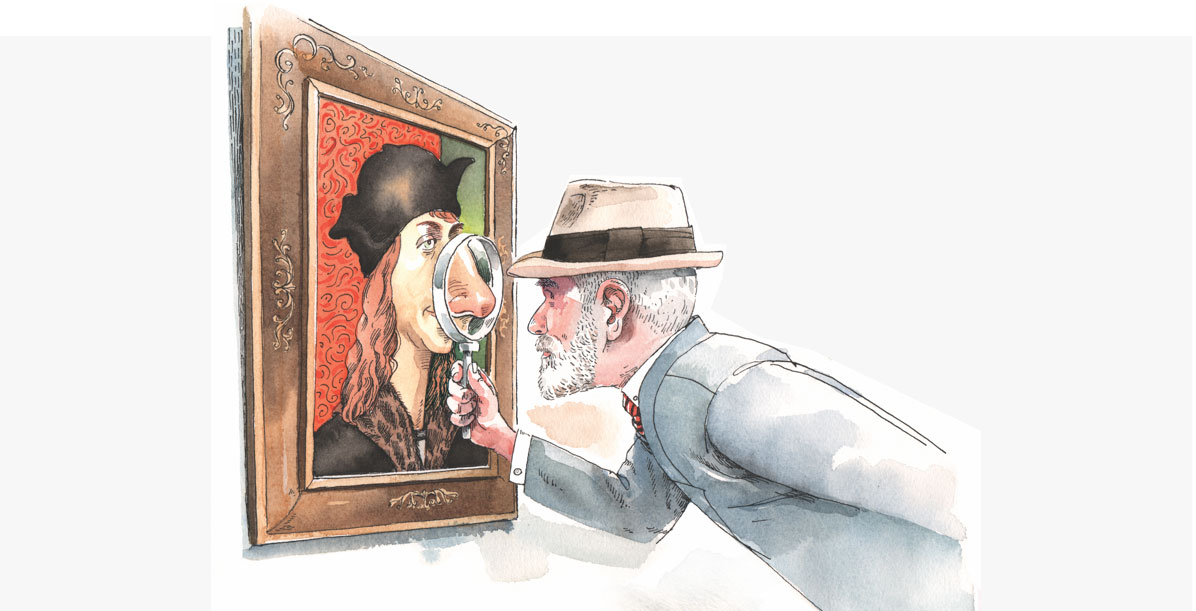
One of the surprises of The Brutalist is that Tóth is depicted as a committed Jew, and the film takes his religious commitment seriously, though it is under siege by nearly every American he encounters. The first thing that his cousin’s non-Jewish wife says to him is “We know someone who could take a look at your nose.” We know what that means; after all, the cousin changed his name and converted to Catholicism to marry her (in fact, Tóth’s crooked, “Jewish” nose was broken jumping from a Nazi railway car). When Tóth takes refuge in a Catholic homeless shelter, he is pressed to attend church. Later on, at a public meeting, his design of a chapel in the Van Burens’ community center is challenged partly because he’s a Jew. A mediocre Protestant architect is brought in to modify his designs. As Tóth says to his wife, “They don’t want us here!”
But this assertion seems more influenced by contemporary political talking points than by the Jewish experience in mid-century America; the opportunities that émigré Jewish professionals had from the 1930s through the 1950s transformed nearly every aspect of American culture. And the intense demand for immigration to the United States by all peoples, despite real prejudice and discrimination that often greeted their arrival, has persisted through the decades because more important liberties were being realized, Goethe’s maxim notwithstanding.
Despite all of this heavy-handed polemicizing, Corbet treats the Jewish aspects of Tóth’s life soberly, without condescension or irony or sentimentality. In fact, they are insisted upon. We see Tóth in a traditional synagogue on Yom Kippur, chanting the ancient litany of communal sins and beating his breast with each one mentioned—“We have trespassed, we have betrayed; we have stolen; we have slandered”—and we feel that we are in the presence of genuine and ardent religious feeling. In a development that has inspired palpable discomfort among some progressive critics, even Zionism is taken seriously. Tóth and his wife question their niece about her decision to move to Israel in the 1950s, and the discussion is a serious one about her need to find her true home.
During the fifteen-minute intermission, Tóth’s life as a Jew is left onscreen. We see his wedding photo from the old country in front of a synagogue whose door declares in Hebrew that it is a gateway to God. Not even America and capitalism could demolish that, could it?
Well, not until Tóth’s work takes on the form of an obsession. He stops attending synagogue. “He worships at the altar of only himself,” his wife declares. It is as if the architect has become an idolater, as all other aspects of his life fall away. But we are unsure what to make of all this. Is his artistic obsession—which entails, among other things, building a Christian altar—a betrayal? A failing? Just a part of his genius? The film will not be of much help; it is too busy with its own construction.
The history of twentieth-century architecture cannot be told without taking account of Jewish architects, including Frank Gehry, Louis I. Kahn, Daniel Libeskind, Moshe Safdie, and Robert Stern. It would have been interesting if The Brutalist had given us some sense of why this is so. That might have happened if we had some understanding of how Tóth’s approach changed from the Bauhaus projects for which he was supposed to have been celebrated before the war to the brutalist project he undertakes for Van Buren.
There are some actual architectural figures that seem to have left a trace on the fictional Tóth. The Bauhaus-educated Marcel Breuer has been mentioned by some, though he renounced his Judaism under Nazi oversight and left Germany before the war. There are clearly allusions to Breuer’s work, including a chair designed by Tóth that, like Breuer’s renowned designs, is made with tubular steel like that used in bicycles (one character calls Tóth’s chair a “tricycle”). Tóth’s chapel also seems to invoke Breuer: In 1961 Breuer designed the brutalist Saint John’s Abbey Church for Benedictine monks in Collegeville, Minnesota, which is constructed with poured concrete and has a cross-shaped space in its slab-like version of a bell tower. Unlike Tóth’s design, however, photographs of Saint John’s Abbey Church show it to be both beautiful and welcoming, with broad spaces and daylight shining through mosaics of stained glass.
Andrew Travers has suggested that another model for Tóth may have been the Bauhaus-trained Herbert Bayer, who designed brutalist, raw concrete buildings for the Aspen Institute in a silver-mining area in Colorado, a state in which Corbet spent his formative years. The allusions are plentiful, but the film never succeeds in setting aside its ideological program for long enough to pay attention to the inevitable complications that real artistic and historical details always present. It may be that no real analogue to Tóth is possible or even plausible.
It is also unclear what kind of example Tóth provides. When he is commissioned by Van Buren’s son for his first design project, he’s asked to make over a traditional library in their Pennsylvania mansion. He strips away all ornamentation, and the space becomes strikingly lovely, a tall, austere circular room in which levered vertical panels can be maneuvered to reveal or conceal the books lining the walls. The center of the room is empty except for an elegant but probably uncomfortable lounge chair (also Breuer-esque) with an austere metal bookstand hovering, more or less uselessly, next to it. It is difficult to imagine actually using this library. There is room to put down exactly one book, and there is nowhere to write. The reader can only recline on a solitary chair with no other position possible. It is beautiful. But useless. The architect has paid attention only to form and not at all to function—the precise opposite of Bauhaus doctrine.

The approach Tóth takes to his main project is even more bizarre. Van Buren commissions him to build a community center in nearby Doylestown. It is to include a library, a gymnasium, an auditorium, and, to qualify for funding from the local government, a chapel. It is supposed to be, as Van Buren puts it, “a place for gathering, reflecting, learning.” But the building that takes shape is almost an anti-community center. It is inconceivable that its towering cement spaces would be welcoming to anybody. The building has almost no imaginable human function.
It is a monument to a kind of madness. But, oddly, it is not meant to be seen as such by the movie, which seems almost naïve about the perversity on display. Much is made, for example, of Tóth’s claims that he designed the chapel so that as the sun moved across the sky, it would shine through gaps in the concrete to create an image of the cross that would move—with the passage of the sun through the heavens—across the chapel’s altar piece. Is this possible? The sun shines at different angles in different seasons; maybe it would create the requisite effect once or twice a year. Is this impossible cross of light meant to be Tóth’s ethereal allusion to his own martyrdom? We don’t know. But the film still tries to suggest this intended community center has some higher purpose.
In an epilogue, set in 1980, Tóth’s niece Zsófia, who has indeed moved to Israel, reads a tribute to her uncle’s work and gives it yet another interpretation. He was actually trying to evoke Buchenwald (where he was imprisoned) and Dachau (where his Erzsébet was). This is presented as a conceptual and moral triumph, but why? Is it supposed to explain the use of brutalist style by a Jewish architect? It actually cheapens the entire architectural project and glibly attributes the aesthetic ideas of brutalism to the same kind of programmatic monomania that dominates the movie. Tóth was commissioned to create a community center. Instead he has created an airless, brutish, inhospitable building, a tribute to a vision that has no living human in mind, certainly not the citizens of the little Pennsylvania town it was built to serve.
This is artistry gone awry. And the reason for its failure has nothing to do with American intolerance or the predations of capitalism. It arises out of formulaic clichés and constrained categories to which this film is enslaved. Simple ideas were imposed on material that is far more complicated, so in place of insight, we have mere effect. And I’m not just talking about the architecture.
Suggested Reading
Going Under with Klinghoffer
When it came to New York’s Metropolitan Opera this past fall The Death of Klinghoffer faced angry—and, it must be admitted, some pretty shrill—demonstrators.
A Tale of Two Synagogues
Frank Lloyd Wright built a dazzling temple outside Philadelphia. Too bad he didn’t look closely at the synagogue of Gwoździec, Poland, built two hundred years earlier.

“In Order that They Didn’t Die Alone”: Remembering Claude Lanzmann
The iconic director of the most critically acclaimed movie about the Holocaust, Shoah, died last week.

Art Over Vitebsk
After the revolution, Marc Chagall—somewhat implausibly—became plenipotentiary for the affairs of art in the province of Vitebsk. Against all probability, the avant-garde bloomed in a provincial Russian city dominated by Jewish culture.
Comments
You must log in to comment Log In