Category Error
“The Hebrew Bible is the modern university’s blind side,” Yoram Hazony writes, and his new book represents a spirited and determined effort to show the modern academy just what a precious resource it is missing and just how impoverished its thinking is as a result.
Given the academy’s investment in biblical studies—the largest professional association in the field, the Society of Biblical Literature, has more than 8,000 members—one might be inclined to question the diagnosis. But as Hazony sees it, the discipline of biblical studies has, in the main, not respected but trivialized the Hebrew Bible. He is especially critical of what he calls “the academic tradition of the German research university.” It was this, he maintains, that encouraged “the development of the ‘source-critical’ method for studying the Bible, which,” as he puts it, “understood the biblical texts as ‘corrupt’—the result of centuries of tampering and abuse by anonymous scribes representing mutually hostile religious sects.” The result of this baleful process—one spearheaded by anti-Semitic scholars—is that the biblical texts “are little better than patchworks of fragments that are at times less than a single verse in length.” Although he later acknowledges that this image of the discipline is increasingly obsolete (it is also grossly unfair), he observes that even the newer scholarship fails to do justice to the Hebrew Bible as a source of ideas. And it is to the ideas in the Hebrew Bible, especially those of a supposedly philosophical character, that Hazony most wants to draw attention.
According to Hazony, another cause of the academic neglect of the Hebrew Bible, and especially of its value as a source of philosophy, is the philhellenism of Enlightenment thinkers. The 19th-century philosopher G.W.F. Hegel, to cite but one example among many, went so far as to say that there have been only two epochs in the history of philosophy: “the Greek and the Teutonic.” He identified Judaism with “self-conscious abjectness and depression” and wrote that the Jews themselves have always been characterized by “a feeling of nothingness . . . a sense of desolation, an abjectness where no reason was.” For Hegel, Christianity represented a new creation in which something positive replaced that Jewish nothingness. The notion that the Hebrew Bible might represent a continuing and valuable alternative to Greek philosophy and to Christian theology is not one to which this sort of thinking is open. And the influence of this philhellenism and Christian supersessionism, Hazony points out, can easily be felt among cultural elites to this day, even among scholars who think of themselves as distant from the Greco-Roman heritage and Christianity alike.
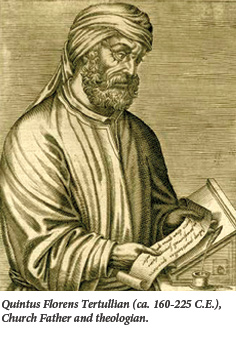
The ideal of synthesizing philosophy and the gospel represents, however, only one stream in Christian tradition. A contrasting one speaks of God’s having “made foolish the wisdom of the world,” as the apostle Paul puts it, for its message of “Christ crucified [is both] a stumbling block to Jews and foolishness to Gentiles.” As Hazony sees it, this stream does not aid his cause, either; in fact, it, too, undermines the proper appreciation of the Hebrew Bible. For by making everything “depend on the question of whether certain events did in fact take place as reported,” it replaces philosophical reasoning with what Christians tend to call “witnessing,” that is, giving testimony about what has happened. To Hazony “this framework shares almost nothing—one might even say nothing at all—with philosophy.” “When, after all,” he asks, “do we recall a philosopher seeking to establish that this or that event took place?” And unlike the philosopher—and, in Hazony’s telling, the Hebrew Bible as well—the Christian must subordinate his or her mind to what the early Christian writer Tertullian (ca. 160–225) calls “the rule of faith.” Without that act of faith in the gospel, the philosophical quest will lead to heresy. With it, the philosophical quest becomes pointless, for the truth philosophy seeks has already been found and, with it, salvation.
The current in Christian tradition that Tertullian represents (Hazony acknowledges that this is “an extraordinarily extreme statement”) sets up a sharp dichotomy of reason and faith, or reason and revelation, that Hazony finds not only destructive in its own right but also a noxious impediment to understanding the books of the Hebrew Bible as what he claims they are: “works of reason,” “works of philosophy.” And so, to Tertullian’s famous rhetorical question, “What has Athens to do with Jerusalem?” Hazony replies, “the kind of faith that bears the label ‘Jerusalem’ in the discourse inspired by Tertullian cannot be found in the Hebrew Bible at all.” And one piece of evidence for this is that the Hebrew Bible offers no counterpart whatsoever to his rule of faith. “Indeed,” Hazony points out, “in the entire vast corpus of texts that make up the Hebrew Bible, we find nothing that presents itself as a definitive catalogue of beliefs (or actions) considered necessary and sufficient for the attainment of salvation . . . The Bible offers us no catechism.” And he goes further: It is not simply that reason and revelation are compatible. The distinction itself is alien to that corpus and needs “to be thrown out as a basis for interpreting the Hebrew Bible.”
This total disavowal of the reason-revelation distinction in connection with the Hebrew Bible seems odd in light of one large fact: so much of that book claims to represent the speech of God Himself. To Hazony, though, the presence of divine speech in a given text does not at all obligate us to classify it as a work of revelation rather than reason. If it did, he argues, we would have to classify various works by ancient Greek philosophers as something other than reason as well. The pre-Socratic Empedocles (ca. 490–430 B.C.E), for example, ascribes his ideas to the goddess Calliope, but no one would say that as a result those ideas do not qualify as philosophy. Why can’t the same courtesy be extended to the Hebrew Bible and the God of Israel?
Within the Hebrew Bible, Hazony places his primary emphasis upon what he calls “the History of Israel,” the block of material that extends from Genesis through Second Kings. The goal of the History, as he sees it, was to prevent the disappearance of the Jews after their loss of the Land of Israel and their exile into Babylonia, where the work, in fact, ends. In line with his intensely negative view of source criticism, Hazony feels no need to reconstruct the prehistory of this block of text. He is as happy as any fundamentalist to treat the text as a unity and to disregard the seams and variant perspectives on which source critics focus. Jewish traditionalists, however, will not be happy with his elision of the vital canonical boundary between the Torah (which ends with Deuteronomy) and the Prophets (which begin with Joshua), a boundary that separates higher and lower degrees of authority. In Hazony’s view, whether the object of study is the works of Aristotle or the Hebrew Bible, compositional history is important to historians alone, whereas philosophers and political theorists can safely disregard it in their study of “the finished texts as we have them.” The idea that we deprive ourselves of precious perspectives and traditions when we read the text only through the lens of its last redactor—a key generating insight of the source criticism of all literatures—is not one with which Hazony reckons. In support of his method, Hazony refers to the work of the late Brevard S. Childs, one of the most important figures in biblical scholarship of the last generation. Hazony interprets Childs as “focusing on the works of the final authors.” Childs, however, accepted source criticism and made it central to his analysis of the meaning of the finished text and to the way the text can be responsibly appropriated today. His method involved a sophisticated analysis of the interaction of the parts and the whole and did not obliterate the compositional strata in the name of the final product. (Hazony’s notion of the final author is more problematic than he seems to recognize, both because the text alone does not answer the question of which version is final and because it inevitably continues to attract commentaries and generate expansions.) Childs also treated canonical boundaries as important to the ongoing process of interpretation. Compared to his approach, Hazony’s is flat, static, and unidimensional.
Despite the ostensible particularism of its purpose (to prevent the people Israel from disappearing), the History of Israel, in Hazony’s view, is focused in actuality on universal humanity, as befits a work of philosophy. “The final author of the History,” he argues, “wished to persuade his readers that there exists a law whose force is of a universal nature, because it derives from the way the world itself was made . . . [and] that the law of Moses was the very first systematic expression of this natural law, written down for the benefit of Israel and of all mankind.” Like any work of philosophy (at least in its classical mode), the purpose of the Hebrew Bible “was to assist individuals and nations looking to discover the true and the good in accordance with man’s natural abilities.” The events on which the History focuses are thus not miraculous and require no special grace to understand. Its narratives focus not on the unique and unparalleled but on “the general natures of things.” They “teach us,” Hazony writes, quoting Leon Kass, “not what happened, but what always happens.“
How does Hazony extract philosophical messages from biblical texts that, on the face of it, seem to have a very different purpose? One of his methods is to read narratives typologically. Thus, in the little tale of Cain and Abel in Genesis 4, he concentrates on the occupations of the two brothers, as others have before. But Hazony goes further and finds here “the division of mankind into two theoretical types: that of the farmer, Cain, who represents tradition-bound and idolatrous societies such as Egypt and Babylonia, whose highest value is obedience; and that of the shepherd, Abel, who stands for the spirit of freedom in search of that which is the true good.” Hazony correlates this sharp contrast of farmer and shepherd with the contrast of settled peoples and nomads that he believes to be widespread in the Hebrew Bible. “Cain,” he writes, “embodies the virtues associated with the agrarian societies of the ancient Near East: Cain obeys God’s instructions; he perpetuates the order inherited from his father; and he exhibits piety to the gods who have created this order.” Abel, by contrast, “embodies virtues that are associated with the nomadic societies that were the bane of ancient Near Eastern civilization: He is disobedient, preoccupied with improving his own lot and that of his dependents, and willing to overturn the inherited order to achieve this end.”
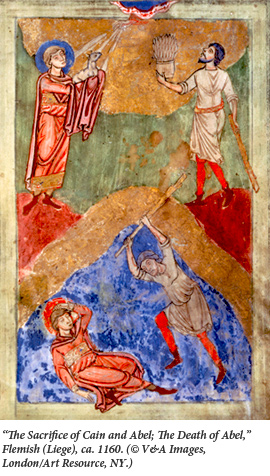
Now the basis for these far-reaching conclusions in the sixteen verses of the text is slight, to put it mildly, and some of Hazony’s argument rests on questionable interpretations and translations. But just as serious is his reliance on a notion of the relationship of agriculturalists and pastoralists in the ancient Near East that most knowledgeable scholars discarded decades ago. In the case of Israel and its immediate neighbors, villagers both farmed and kept flocks of sheep and goats; they sometimes had an ox and a donkey as well. Even in drier regions, where people necessarily relied more heavily on their flocks, pastoralists were in regular and symbiotic contact with villagers. The romantic image of the tradition-bound farmer and the freedom-loving nomad may be useful to filmmakers or novelists, or once was, but it does not correspond to the world of the ancient Near East. And this illustrates a larger point about those who think they can sidestep historical reconstruction in their interpretation of biblical (or other) texts: Whether we acknowledge it or not, we inevitably presuppose one historical backdrop or another. The choice is not whether to locate a text in a historical world. It is whether to do so poorly or well. In this instance (and several others), Hazony has fallen into a trap that his own low estimation of the discipline of biblical studies has set for him.
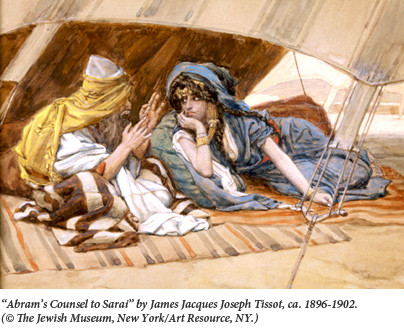
In other cases, his technique is simply to extract a moral message from the narrative. (Whether so doing amounts to an exercise in philosophy is another question.) Thus, when Abram, escaping famine in the Promised Land by going to Egypt, passes his wife Sarai off as his sister (Genesis 12), Hazony sees this as “a sin—that of throwing the women supposedly under one’s protection to the dogs to save oneself.” What I expected to find here was the alternative that Hazony thinks Abram should have chosen. Should he and his wife have stayed in the Land and starved to death? Should the two of them have relied on a miracle to sustain themselves when others were dying? And, once in Egypt, should he have acknowledged the truth about their relationship and endured the death he expected? If so, just how would that have been to Sarai’s benefit? The answers are not forthcoming. In this and many other instances, Hazony strikes me as too eager to moralize and too impatient to deal adequately with the literary-and moral-ambiguity of the texts from which he wants to extract his timeless lessons. To his credit, he acknowledges that he has, as he puts it, “of necessity, slighted the literary quality of the narrative, which certainly does not remain satisfied with depicting biblical figures only in terms of their place in such a scheme of abstract types.” But the schemes themselves, though creative, usually struck me as tenuous and rather allegorical, and the concision, subtlety, and complexity of the narratives seem to me to make it much harder to derive a univocal message from them than Hazony realizes. Time and again, I was left with the sense that the extremity of the situation in which the protagonists find themselves undercuts Hazony’s effort to derive a straightforward moral from the narratives.
Hazony seeks to uncover in the Hebrew Bible not only a philosophy but also a political theory. As he sees it, the experience of slavery in Egypt so scarred the Israelites that, once back in the Land, they sought instead “a condition of anarchic liberty,” as evidenced in the words with which the early leader Gideon declined the offer of kingship: “I will not rule over you, nor will my son rule over you: the Lord will rule over you,” using the four-letter proper name of the God of Israel. Later, Samuel, making a similar point, notes that a king is likely to requisition the property of the populace, a prospect that offends the ethos of the biblical authors, “whose eye,” Hazony thinks, “is to the freedom of the shepherd living in tents” (actually, the property listed in that text includes fields, vineyards, and olive orchards). As time goes on, though, anarchic liberty proves unworkable, and the Israelites, having been rescued from tyranny by Moses, now must be rescued from anarchy by David. Even so, “the fact of God’s reluctance hangs over the established state,” and the king’s “rule must be in keeping with an independent standard of justice and goodness, without which the consent of the people will never suffice.” What the Hebrew Bible comes to endorse, then, is what Hazony calls a “limited state: one headed by a king . . . [who is] subject to a law that is higher than his own whims, and whose purpose is the well-being of the nation.”
All this sounds very contemporary, but it again takes liberties with the biblical material. Consider the term “anarchic liberty.” What Gideon is said to have endorsed is neither anarchy nor liberty: it is theocracy, the rule of God rather than man. Precisely what arrangements the author of the text had in mind is a large historical issue, and the theological question of how the kingship of God can today be something more than a liturgical affirmation or an eschatological ideal is at least as perplexing. But it will do no good to marginalize the God of Israel in a text in which he is central and human kingship is seen as insurrectionary by definition. As for the terminology of “state,” limited or other, this underestimates the intensely patrimonial character of ancient Israel—the centrality, political power, and phenomenal survival capacity of kin-groups of various sizes. What Hazony, like others, calls “the united kingdom” is probably better seen as a personal union of Israel and Judah in the figure of David—a union that dissolved into its earlier tribal components in the time of his grandson, Rehoboam. Hazony is correct that the latter is presented as offending against the standards of justice and the image of the good king in Israel (also, elsewhere), but what limited his power in practice was the political force of the tribal configurations, and these have scant analogues in contemporary Western societies.
There is also room to wonder whether the Hebrew Bible endorses the model of limited kingship so exclusively. For in some texts one finds a much grander and more mythological concept of the king—the king from the line of David as the adopted (or is it begotten?) son of the Lord, who has promised his ancestor an eternal dynasty; a king who rules over cosmic forces; reigns over a vast empire whose vassals incur the Lord’s deadly wrath if they dare rebel; receives the tribute of far-away kings; and, in fact, has subjugated or should subjugate all nations. To be sure, he does all this by dint of God’s choice, and he is expected to obey God and to practice justice. Still, terms like “limited state” strike me as missing the import of texts like these and failing in the process to deal with the internal diversity of the Hebrew Bible. And do expressions like “independent standard of justice” and “consent of the people” reckon with the experience of the foreign nations subjugated to the Davidic emperor on the authority of his (but not their) God?
As Hazony sees it, the books of the Hebrew Bible should be read as works of philosophy because “they engage in the effort to derive and make known to us the general causes or natures of the things encountered in human experience.” If the Hebrew Bible falls into this category, one wonders why it does so more than, say, serious novels, plays, or films do. And this, in turn, raises again the question of what is lost when the Hebrew Bible is placed under that rubric. This is not a question in which Hazony has much interest. In his view, even a figure like the prophet Jeremiah was really a philosopher, one who, in fact, “argue[d] that each and every person is responsible for trying to establish the truth for themselves.” A good example of the diametric opposite view of this process of the individual’s discovery of the universal truth can be found, according to Hazony, in Tertullian’s rule of faith, which, as we have seen, he thinks lacks any parallel in the Hebrew Bible. But is that the case?
Tertullian’s rule of faith is not a set of philosophical propositions, but a summary of what he regards as the historical events that are indispensable to Christianity, such as the incarnation of God in Jesus, and Jesus’ death, resurrection, ascension, and future return. So understood, the rule has a good, if imperfect, analogy in the many accounts in the Hebrew Bible, some in prose and some in poetry, of the foundational acts of the Lord, God of Israel, in relationship to his people, such as his choosing their patriarchs, the descent of Israel into Egypt, the Lord’s rescue of his chosen people from slavery, and his bringing them into the land that he had promised their forefathers. These are not so tightly formulated as a Christian creed and are not connected to personal salvation, of course, but they do establish certain boundaries for discourse about God and the world. And it is not hard to see how one might overstep those biblical boundaries. Imagine that some ancient Israelites announced that it was not the Lord but another god (perhaps his arch-rival Baal) who took Israel out of Egypt, or that the exodus was solely the result of Israel’s own doing or the position of the stars or just dumb luck, or that the exodus and the gift of the Land imposed no obligations upon the beneficiaries of them and can be safely forgotten. The dominant voices in Hazony’s History of Israel would not approve. And if those Israelites were to retort that this is the truth, after all, that they have established for themselves, I suspect they would be met with something other than applause, or a philosophical counterargument.
The point is this: the focus of Hazony’s History, and of most of the Hebrew Bible, is not on “discover[ing] the true and the good in accordance with man’s natural abilities,” as he thinks. The focus, rather, is (to invert and adapt Kass’ words) on what happened, not on what always or naturally happens. It lies on the world-transforming acts of the unique and unparalleled God in covenant with the unique and unparalleled people he has formed for himself. And it is within that covenantal framework of love, service, and obedience that the laws propounded in the name of Moses find their rationale. They are not “natural law, written down for the benefit of Israel and all mankind,” as Hazony puts it. To be sure, some of the biblical norms appeal to natural law theorists, but I have yet to meet the philosopher who thinks wearing a garment of mixed wool and linen or eating pork (but not beef) violates the natural law.
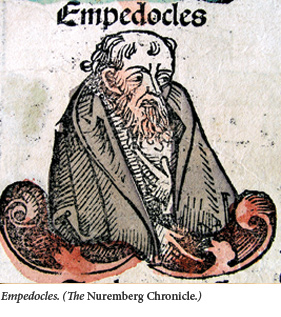
This helps us see why the relationship of the Lord to the people of Israel and to the Hebrew Bible is fundamentally different from the relationship of the muse Calliope to the philosopher Empedocles, who asks her to “reveal a good discourse about the blessed gods.” Presumably, such a discourse stands independent of the goddess who transmits it. But, according to the biblical narrative, the norms of the Torah are embedded within the covenant, and observing them is an act of covenantal service, of loyalty to the Lord alone in an ongoing relationship to which he is not dispensable. Break them loose from that relationship and they mean something very different from what the Hebrew Bible intends. In other words, whatever value these norms may have as expressions of abstract reasoning, in the Hebrew Bible they are cast as commandments—vital elements in the intensely personal relationship of the one who commands and those who are
commanded.
There is another approach to behavioral norms in the Hebrew Bible, however. In contrast to Hazony’s History of Israel, the Wisdom literature concentrates not on the national story or on the mighty interventions of the miracle-working God, but on the quiet regularities of the created order and the nexus of deed and consequence (or its scandalous absence). Proverbs, Job, and Ecclesiastes do not so much as mention the foundational acts of God in relation to Israel on which the covenantal relationship is based. Given Hazony’s conviction that “the word of God is continuous with human wisdom and reason,” his focus on the more particularistic and historiographic books rather than on this more universalistic and didactic literature surprised me. It results in a book committed to a worldview very different from that of the literature it seeks to interpret and that it claims to represent.
Yoram Hazony’s new book issues a needed challenge to the guild of biblical scholars, whose members assiduously perform their necessary philological and historical labors in order to restore the text to its original context—and then too often leave it there. His analysis of the historical factors that cause the wider academy to ignore or disparage the Hebrew Bible, though overstated, is also valuable. But I would cite another factor, one that I believe is today much more potent: the deep secularity of most academics, their profound unease with the notion of a personal God who acts in history, has chosen a particular people for a special covenantal relationship, and has revealed his will (much of it mysterious and seemingly unnecessary) to them. The Philosophy of Hebrew Scripture shares that unease.
Suggested Reading
State and Counterstate
Debates about Zion and its relation to the diaspora aren't new. David Myers and Noam Pianko have retrieved the forgotten ideas of several interesting figures, foremost among them Simon Rawidowicz. Do they speak to us now?

At the Anti-Israel Carnival
Students at Rutgers University protest Israel like they're attending a carnival. A professor explores the troubling scenes she's witnessed—and rereads Mikhail Bakhtin.
“The Point of Free Will”: A Response to Abraham Socher
For mussarists, the internal struggle between good and evil is the great cosmic and spiritual drama, a position entirely in line with the conventional rabbinic view of moral decision-making.

Us or Them
It all started with a tweet: “Curious about your whiteness? Come to our meeting.” Edelman was curious.




Comments
You must log in to comment Log In