Tragic Failure
Since the Hamas invasion of Israel on the morning of October 7, 2023, the Israeli government has blocked an official inquiry into the massacre and its causes. As the war has metastasized across the region over nearly three years, simply keeping events straight has become almost impossible, a state of affairs that suits the people in power, who are also the people responsible for the disaster. Into this vacuum of information, just in time, comes 06:29 by Amos Harel—the staggering, infuriating, and illuminating new Hebrew account of October 7 and its aftermath.
Harel will be familiar to anyone following events in Israel as the country’s most trusted analyst of military affairs. A correspondent intimately involved with every aspect of the Israel Defense Forces for three decades, Harel is the author of three previous books about the army. His day job is at the daily Haaretz, where his byline is among the most respected at a paper that has unfortunately become identified with ideological voices pandering to the international left. His superpower is the ability to process reams of bewildering information into laconic, common-sense reportage. This is what he does in 06:29,in prose at once clinical and harrowing, as he follows the confident and deluded navigators who steered our country into a hurricane.

Published in Israel in May, 06:29 sold out its first printing in a week and was immediately read and discussed more or less everywhere, including up and down the military command chain. An English edition is planned for spring 2027 from the new publisher Odessa Editions, but at the time of this writing, no translation exists, making a description of some of the book’s findings worthwhile here.
Hovering over the events since October 7 the author sees, as many of us do, the ghost of a past war. Harel writes:
There wasn’t a military chief of staff or Mossad director who didn’t know the mythic story of the night between the 5th and 6th of October, 1973, the fateful hours before the surprise attack that started the Yom Kippur War.
That’s when Israel’s leaders and generals, and particularly the officers of military intelligence, misread all signs of an imminent attack. Just before the current war broke out, he tells us, the military chief of staff, Herzi Halevi, was actually reading a biography of Lieutenant General David Elazar, his predecessor from 1973. All of Israel’s leaders knew the story of what went wrong—and repeated it fifty years and one day later.
06:29 refers to the moment on the morning of Simchat Torah when waves of Palestinian jihadis crashed upon the unsuspecting agricultural communities on Israel’s Gaza border, some of which remain empty three years later. The Hamas fighters overran military bases, slaughtered families in their homes and cars, raped women, and murdered more than 350 young people at a rave. The attack ended with 1,200 Israelis dead and 250 held hostage in Gaza, including women, children, and the elderly. Harel describes what happened that day and some of what has happened since. But the most powerful section of the book describes what happened before, when the future might still have been averted.
Harel opens with a young IDF lookout, Yael Leibushor, who was in charge of a bank of cameras on the high-tech Gaza border fence. The fence was just a few hundred yards away from the room full of screens that she shared with other recruits assigned the same job. Leibushor had been a top student at her high school and spent a gap year as a nature guide. She hadn’t wanted this notoriously tough and thankless job, but when the army assigned her to the base at Nahal Oz, adjacent to the kibbutz of the same name, she realized why she had to be there. “If I blink, kids at the kibbutz get murdered,” she once told her mother.
On her screens she saw abnormal activity across the fence and unblinkingly reported it, to no avail. The army was asleep. Something was about to happen: The reader knows what it is, but Leibushor did not. As 06:29 approached on October 7, cameras along the length of the border began picking up signs, some of them reported for the first time here by Harel: A Palestinian approached the fence, then walked back to hold what looked like a consultation with other men at a Hamas position. Another Palestinian ran forward with a ladderlike contraption. A paraglider floated upward from inside the strip. Leibushor’s base was about to be captured, some of her comrades seized at gunpoint to be abused by Palestinian gunmen and caged in tunnels. Others would simply be massacred. Yael Leibushor would not survive the morning. She was twenty.
Unbeknownst to Yael and her direct commanders, Harel tells us, in the hours leading up to 06:29, military intelligence and the Shin Bet had no fewer than thirteen indications that should have put the army on alert—a number higher than what has been reported so far. Most of the indications remain classified, but they include the insertion of forty-five Israeli SIM cards into Palestinian cell phones in different parts of Gaza, preparing them to operate on the Israeli side of the border. The thirteen signs were picked up from four out of five of Hamas’s regional commands, meaning that the impending action was not a pinpoint attack but something being prepared across the entire Gaza Strip—a fact that would have been clear had someone in intelligence taken the step of plotting them on a map that night. No one did.
At 1 a.m., the Shin Bet put out an internal document pointing to “a string of indicative, abnormal signs that indicate readiness for action.” In a terse telephone consultation, an intelligence officer at Southern Command noted this “abnormality” but added, fatally, that whatever Hamas was planning was “not imminent.” By the time of that consultation at 3:15 a.m., thousands of jihadis were already in position, and the meticulously planned operation that Hamas called “Al-Aqsa Flood” was just three hours away.
The chief of staff, Halevi, was woken up and held a telephone consultation with senior commanders—but incredibly, the chief of military intelligence wasn’t on the call, and neither was the commander of the air force. The army had decided Hamas was not interested in a confrontation, and all contradictory information was explained away. The junior commanders on the border itself, who were about to be attacked by Hamas fighters surging through more than sixty breaches in the supposedly impregnable fence, weren’t even informed of any of these consultations.
Months earlier, Harel recounts, a noncommissioned intelligence officer known as “V,” one of the heroes of the story, opened an internal group chat dedicated to the Hamas attack plan—which Israeli intelligence had in fact managed to obtain and study long before and which her commanders had dismissed as somewhere between an aspiration and a pipe dream. V, whose real name remains classified, is a fitting heir to the low-ranking soldiers and analysts of 1973 who knew war was coming and were ignored. She was convinced her superiors were wrong: The Al-Aqsa Flood wasn’t just realistic but impending. It would include the massacre of Israeli civilians living along the fence: At the end of one Hamas exercise, a Palestinian commander was picked up saying on the radio, “We’ve finished murdering the whole kibbutz.” After V’s warnings came to pass, her own brother was wounded in the fighting.
We learn here that she called her prophetic group chat “Death at the kibbutz at any price,” a play on a 2022 pop hit by the Israeli rapper Jimbo J. The song, “Kicking back at the kibbutz for half the price,” extols the virtues of living a cheaper and less stressful life far from the city, and would become a monument to the fantasies of the pre–October 7 era. The rapper’s kibbutz is Or HaNer, near Gaza, where a massacre was averted only because of the heroics of armed kibbutz members. One of Jimbo J’s more recent songs recounts how he and his family had to run for their lives.
The July before the attack, intelligence officers in Southern Command assured their direct commander that Hamas could attempt, at most, two simultaneous raids involving perhaps seventy fighters. The Palestinians were about to act with a force eighty times that size. At the top of Israel’s intelligence apparatus at this time, Harel writes, quoting a former officer, were people who “liked complex concepts, incredibly complicated solutions and theoretical thinking heavy on verbiage.” A junior officer looking for promotion had to play ball, and dissent could be professionally fatal. Even Israel’s own defense minister, Yoav Gallant, appears never to have heard of the Hamas attack plan. When he finally learned, several weeks after October 7, that his subordinates had the plan long before and dismissed it, Harel writes: “Gallant, as unbelievable as this may sound to those who know him, burst into tears.”

Hamas had made no secret of its intentions. A Gazan TV series from 2022, “Fist of the Free,” the author reminds us, showed the group’s elite Nukhba forces invading Israel, capturing the headquarters of the Gaza Division, and bludgeoning the division commander to death. The series received a prize from Yahya Sinwar, the Hamas commander and mastermind of the attack, but military intelligence doesn’t seem to have taken note—perhaps, Harel says, because the corps had closed its open-source intelligence section the previous year. The show seemed like fantasy. But on October 7, Hamas really did capture the division headquarters.
The upshot of all of this was that the Israeli forces on the Gaza border at 06:29 were ludicrously thin: about 1,200 soldiers, by Harel’s count, but barely half of them combat troops, and just thirteen manned tanks. Many top officers were home for the holiday. The troops—situated right next to civilian communities and thus lacking any strategic depth or margin of error—were deadened by years of routine and by a faith in the border fence that was entirely misplaced. Some of their bodies would later be found wearing flak jackets, boxer shorts, and flip-flops: So badly did the system fail that they didn’t even have time to get dressed before running to fight. In the words of an officer involved in investigating the failure:
The sector of the Gaza Division was left without command and control, and the fighting around Gaza became like the video game Call of Duty. No one was running the battle, which became instead hundreds of face-to-face gunfights in which the enemy consistently had the advantage in numbers and in weapons.
At the peak of the massacre at Kibbutz Kfar Aza, for example, 30 Israeli policemen and soldiers faced 250 terrorists.
Hamas had spent years watching the army closely through binoculars and social media. They knew exactly how soldiers responded to incidents on the fence, which they’d been testing for years, sometimes under cover of mass gatherings engineered by Hamas and covered by the international press, with typical naivety and willful blindness, as “protests.” If Israeli officers had looked down on Hamas before October 7, many of those investigating the attack afterward changed their opinion entirely. One of those officers, a retired commando colonel named Ido Kass, commented on a captured Hamas intelligence file dedicated to the army camp at Nahal Oz, the one where Yael Leibushor served and died: “I was in the Navy commandos for 18 years,” Kass told Harel, “and had on maybe one occasion an operational file similar in scope and depth to what they prepared for the assault on the camp.”
If the first layer of the failure is the IDF—Harel’s area of expertise, and thus the thrust of the book—the second is the government led by the increasingly isolated and embattled Benjamin Netanyahu. Harel doesn’t take seriously the claim by Netanyahu’s opponents, Naftali Bennett and Yair Lapid, that the massacre couldn’t have happened on their watch: When they briefly ran the government between 2021 and 2022, he reminds us, they suffered from many of the same delusions about enemy intentions. They continued Netanyahu’s policy of allowing Palestinian workers out of Gaza and letting in tens of millions of dollars from Qatar, much of which was reaching Hamas. But it’s Netanyahu who bears responsibility for the failure, which happened on his watch and as a result of his strategy. Harel writes:
In the months leading up to the massacre, Netanyahu systematically played down the threats awaiting Israel in the region. He concentrated on fighting with his political rivals, legislating the judicial coup and attacking reservists who threatened to refuse to serve.
The year before the attack was characterized by Netanyahu’s formation of an unprecedented government of the extreme right, by his appointment of irresponsible and inflammatory figures to positions of influence, and by his attempt to end the judicial system’s ability to serve as the only brake on government power. All of this sent the country into a spiral of protests and paralysis that created an opportunity obvious to Israel’s enemies—even before cracks appeared in the military in the summer and fall of 2023 as some reservists, particularly in the air force, began to refuse to volunteer for service. Reading in 06:29 what we now know was being prepared in Gaza in precisely those months, Netanyahu’s behavior seems yet more reckless and unforgivable.No Israeli leader has ever failed so badly and with such dire repercussions.
The officer in charge of the research branch of military intelligence, Amit Sa’ar, sent a highly unusual letter to Netanyahu on March 19, seven months before the attack. The letter warned the prime minister of impending war, saying Israel’s enemies had identified “a dire and unprecedented crisis that threatens its cohesion and weakens it.” Hamas, Hezbollah, and Iran, Sa’ar wrote, now saw “an opportunity to create the perfect storm.” He didn’t know the war would come from Gaza, and shared his colleagues’ mistaken focus on Iran. He followed up with no fewer than three more letters to the prime minister in the same vein, to no effect—by this time communication had collapsed between Netanyahu and the security chiefs, whom the prime minister suspected of being political rivals out to stop his reforms. Harel describes an utter breakdown of trust among the people supposed to be keeping Israelis safe.
Three months after October 7, when Harel met the author of those letters—also one of the intelligence men most responsible for failing to understand Hamas—Sa’ar seemed stricken, “a man who’d seen a ghost.” The intelligence officer told the author he was staying on in his position only because he had to understand how Yahya Sinwar had tricked him. This thumbnail portrait is reminiscent of the famous descriptions of Shmuel Gonen, a general who became identified with the failure of the Yom Kippur War and who ended up a haunted figure in self-imposed exile in Africa, running a remote diamond mine while returning obsessively to his maps of the Sinai front in 1973. Sa’ar, who later resigned, died early this year of a brain tumor at age forty-seven. “Between October 8 and 10,” an officer from Unit 8200 of military intelligence told the author, referring to the days after the massacre, “I was afraid of a wave of suicides in the unit. I thought about which building I would jump off.”
I have detailed only a small part of the information that Harel presents in 06:29. The story is not just an account of a war in the Middle East but of how any human system—an army, a company, a state—calcifies and becomes prisoner of its own misconceptions and bureaucracy before ultimately failing.
It’s true that Harel’s book is an Israeli account of the war—meaning that it’s an account of the real war as experienced by the Israeli side, not of the propaganda war that has been at the center of the experience of most readers in English. This is evident, for example, in Harel’s scant attention to the vast information campaign waged against Israel or to the “genocide” libel at the center of that campaign. In Israel, that libel has been taken up by some crank academics and hard-left journalists, including a few affiliated with Harel’s own newspaper, but is generally perceived to be a falsehood so obvious it need not be taken seriously. Harel briefly and politely dismisses the genocide charge in his book but doesn’t dwell on why it has been deployed or has proven so potent. The future English version could effectively expand on this. But it’s the intimate angle and the tight zoom of 06:29, the work of an Israeli insider, that gives this superb book its often unbearable intensity.
The author of 06:29 is a journalist, not a commission of inquiry. Harel has no state budget, team of lawyers, or power of subpoena. But this book is the closest thing we have so far to a comprehensive and public reckoning with the failures that led to October 7. 06:29 is yet another example of a scenario that we in Israel have seen again and again since that fateful hour nearly three years ago, and that indeed can be said to have saved the country: The state fails, and a citizen rises to the occasion.
Suggested Reading
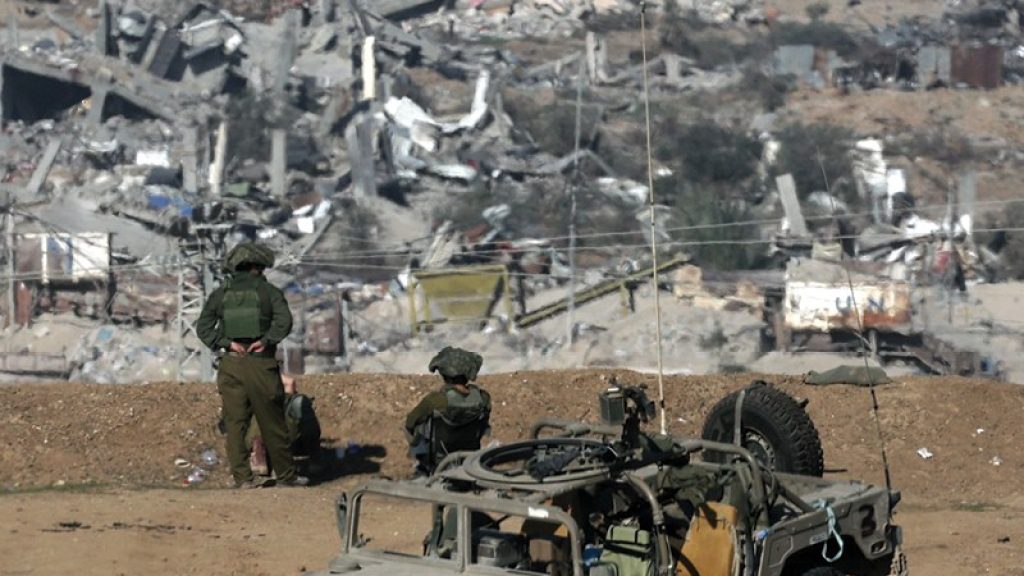
A Terrible Price
An anthropologist-soldier's field notes from Gaza are less a tour of the battlefield than of the author’s troubled mind.

My Father’s Resistance: A Memoir
A history of Holocaust survival, found near a basement boiler.

Religious Freedom and Jewish Experience
Religious liberty is back on the Supreme Court’s docket. The court should think carefully about what freedom of religion really means in different communities. Take Jews for instance . . .
Emancipation and Its Discontents
How a small, marginal community of Moravian Jews grappled with the challenges modernization and secularization brought to European Jewry.




Comments
You must log in to comment Log In