Rediscovering Rebecca Gratz
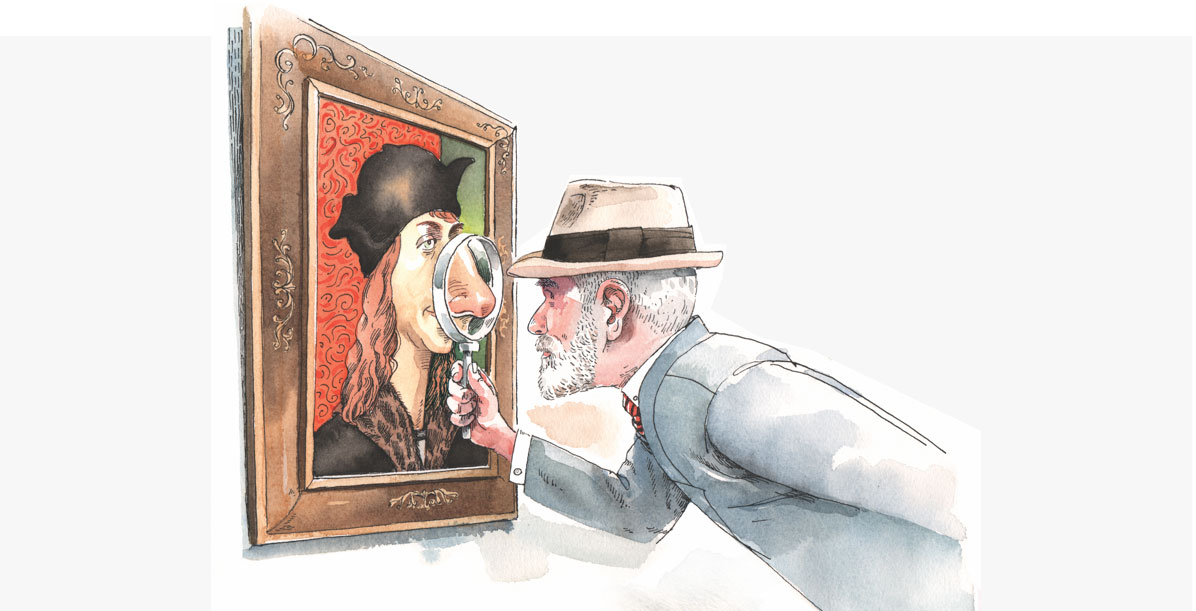
Rebecca Gratz is regularly described in books about Jews in the United States as the foremost American Jewish woman of the nineteenth century. A famous portrait of her, painted by Thomas Sully, one of the leading artists of the period, depicts a handsome, serious-looking woman whose eyes are focused on something we cannot see. The portrait gives no hint of her Jewish identity and offers few clues about her personality. Search online and you will find references to her philanthropic activities and, inevitably, versions of a romantic legend. If the woman in Sully’s portrait seems melancholy, the legend suggests, perhaps she is recalling how she chose to remain unmarried because the man she loved was a Christian and she was determined to remain loyal to her Jewish faith. A well-known elaboration on the legend adds the claim that her story inspired the Jewish character Rebecca in Walter Scott’s nineteenth-century bestseller Ivanhoe, who similarly puts Jewish loyalty above her own happiness.
Dianne Ashton’s 1997 biography helps explain why the woman in Sully’s portrait features in every history of American Jewish life. Like the famous Berlin salonnières Rahel Varnhagen and Henriette Herz, Rebecca Gratz attracted all the leading figures in the American cultural life of her day to her wealthy Philadelphia family’s home. She also helped found Philadelphia’s first orphanage in 1815 and served as its executive secretary for forty years, making her one of the first American Jewish women to take a leading role in promoting philanthropic causes. Unlike her Berlin contemporaries, Gratz also took an active role in developing Jewish communal institutions. She created the first independent Jewish women’s organizations in America, including the first Jewish foster home. Perhaps her most lasting contribution to American Jewish life was her establishment of the first Jewish Sunday school, a model that endures (more or less) today.

When she died in 1869, newspapers across America and as far away as Glasgow, Scotland, published obituaries saluting her as “the original of Rebecca in Ivanhoe,” a claim that had begun to circulate even before Sully painted his portrait in 1831. A half-century after Gratz died, one of her last surviving grandnephews denounced “the fable connecting Aunt Becky with Rebecca of Ivanhoe, which has no foundation in fact and the truth of which Aunt Becky, Cousin Horace and others of the family at the time of its appearance and subsequently vigorously denied.”
True or not, however, the notion of Rebecca as a saintly Jewish virgin had an irresistible appeal, both to Jews and to Christians. Isaac Mayer Wise, the most prominent American rabbi of the day, printed a version of the story in the obituary carried in his newspaper, the American Israelite. When the news of Gratz’s death reached the small Kentucky town of Pewee Valley, a local poetess who had known her when she was in school in Philadelphia exalted her in verse, referring to the “legend that a Master’s pen / found inspiration in her noble mien” and concluding that “her place / Is with the mightiest people of her race, / God’s earliest chosen, who, a shining band, / Before the throne of great Jehovah stand / In the bland presence of the Nazarene.”
Before she became a romantic symbol whom Christians could imagine being blessed by Jesus, however, Rebecca was a real person. I have come to know her, so to speak, in the course of researching the life of her youngest sibling, her brother Benjamin, who left Philadelphia in 1819 to become, for several decades, the only Jew in Lexington, Kentucky, where I have lived for the past four decades. In doing so, I have been reading her letters to Benjamin, his first and second wife, and their children. These letters make up more than half of the items now available in the recently established Rebecca Gratz Digital Collection, an initiative of Gratz College in Philadelphia, which was founded with an endowment from Hyman Gratz, an older brother of Rebecca and Benjamin. This project brings together correspondence previously dispersed in numerous libraries and archives and has already sparked new interest in Rebecca’s life. There are undoubtedly other Gratz letters still waiting to be discovered—my own research has turned up more than a hundred that are not yet included in the Gratz College collection—but it is now possible to see that Rebecca was a much more complex person than both the tragic saintly Jewess of legend and the enterprising philanthropist of the standard histories.
Her letters show, for example, that although she never married, she nevertheless had an astonishingly busy and rewarding family life. She began taking on family responsibilities early: When she was only thirteen, a stroke left her father, Michael Gratz, chronically depressed and unable to continue his career. An immigrant from Silesia, he had made a fortune in trade and speculation in land grants in the American West and was among the founders of Philadelphia’s first Jewish congregation, Mikveh Israel, which still exists today. Rebecca’s older brothers Simon and Hyman replaced their father in business, but her three older sisters were all married. As a result, during the years when she might have been dreaming of love and marriage, Rebecca and her younger sister Sarah found themselves helping to raise their three younger brothers, Jacob, Joseph, and Benjamin, as well as caring for some of their young nieces, a role Rebecca clearly found fulfilling. In 1803, when she was still only twenty-two, she wrote to her older sister Richea, “The partiality of a child is irresistible when at home she calls on me to supply all her little wants . . . and when afflicted comes to me for comfort or redress.”
When Michael Gratz died in 1811, the siblings agreed not to divide his estate, and all of them except their oldest brother, Simon, continued to live together in the family house. The death of Sarah, Rebecca’s only unmarried sister, in 1817 left her as the sole woman of the house, and the death of her sister Rachel in 1823 added six young nieces to her care. The young women were her companions until they left to marry, and her brothers Hyman, Jacob, and Joseph lived with her until their deaths in the 1850s. It is possible that Rebecca simply had no time for a husband or a family beyond the large one that she was already taking care of.
As she grew into the role she would occupy until the last years of her life, the childless Rebecca behaved more and more like a stereotypical Jewish mother. When her brother Joseph made a trip to Kentucky and New Orleans in 1807, she reminded him of his Jewish obligations. Jews would not “have to complain of the contempt into which we have fallen,” she wrote, “did not so many of our own members, by their pusillanimous desertion, throw a stigma on our laws.” Rebecca’s penchant—if not for Jewish mothering, at least for helicopter sistering—came to the fore particularly in the case of her youngest brother, Benjamin, who was still a teenager when their father died in 1811. Rebecca plied him with anxious letters during his service in the Pennsylvania militia in the War of 1812. When his older brothers sent him to Kentucky in 1818 to look after the family’s business interests in the West, she worried that he might not be eating well or dressing warmly enough. Her greatest fear, however, was that he might not return to Philadelphia and civilization. “I could not bear, that you should waste the flower of your days—(which can never bloom again) in such vain experiments,” she wrote to him.

To liberate himself from Rebecca’s constant supervision, Benjamin did something even worse: He married Maria Gist, a Christian woman from Lexington, and settled in Kentucky. Even though Rebecca had met and liked Maria when she had visited Philadelphia, she was initially heartbroken. “I have always thought conformity of religious opinions essential, and therefore could not approve of my Brother’s election,” she wrote to a friend.
Once the marriage had taken place, however, Rebecca set out to win over her new sister-in-law. In her 168 surviving letters to Maria, which make up the single largest body of her surviving correspondence, she demanded “the gratification of witnessing your happiness, you must present it in frequent communications to my mind’s eye.” Although she had never had a child of her own, Rebecca was also free with advice about pregnancy and the challenges of parenting, and she did not hide her hope of persuading the young couple to relocate to Philadelphia. Benjamin kept his distance from his sister—complaints that “my dear brother never writes” were a staple of Rebecca’s letters to Maria—but the two women became real friends.
Like Rebecca, Maria was a dark-haired beauty who charmed everyone she met. Maria also proved to be an intellectual match for her formidable sister-in-law. Although Maria’s letters to Rebecca do not seem to have survived, Rebecca’s responses show that they engaged each other on a much wider range of topics than the family news that dominates most of her other correspondence. Among the subjects that concerned them both was religion, and Rebecca’s letters to Maria are crucial for understanding the nature of her commitment to Judaism. Rebecca knew that American Jews were tolerated in ways they had never been elsewhere, but she also knew that many zealous American Christians considered it their duty to persuade Jews that their faith had been superseded. Maria presented Rebecca with a particular challenge because she wasn’t herself a rigid believer but rather a seeker who had come to doubt the doctrine of the Trinity and the teaching that evil and death entered the world because of Eve’s sin. Willing to question the dogmas with which she had been brought up, Maria did not hesitate to ask Rebecca why she clung to the “superstition” that Benjamin had abandoned to marry her.
Rebecca remained a loyal and observant Jew throughout her life. She had a pew in the women’s gallery of the Mikveh Israel synagogue, where her brother Hyman was for many years the gabbai. In 1861, she told one of her nieces that since she had been alone on Purim, she had read the book of Esther to herself. Although, like other Jewish women of her time and place, she had no formal religious education, Rebecca discussed Jewish beliefs and practices with her congregational rabbi Isaac Leeser as well as Jacob Mordecai and Morris Jacob Raphall, whose public lectures “On the Poetry of the Hebrews” she described as “a very superior intellectual treat.”
In her letters to Maria and others, however, Rebecca used her own words to explain her beliefs. Writing to one of her nieces in 1830, Rebecca rejected the idea that Christianity held any spiritual truths that were not equally present in Judaism:
Those who are desirous of coming at the truth have only to read the old testament carefully, to find the whole system of morality & religion there laid down, on which Christianity is built. What authority they had to change & new model it, I do not pretend to judge.
She challenged one Christian friend to show her that the Lord’s Prayer contained anything that was not already in Judaism. Rebecca had nothing against Christians who followed their own faith, but she was sure that “the parental care and mercy of God extends over all he has created, and man various in opinions and destiny—is still his noblest work, and equal in his sight if honest in the profession of faith” and that there was therefore no reason for Jews to abandon their own convictions.
When Maria married Benjamin, she accepted the fact that he would not convert to her faith. Rebecca wrote to Benjamin in 1825:
I love your dear Maria and admire the forbearance which leaves unmolested the religious opinions she knows are sacred in your estimation—may you both continue to worship according to the dictates of your conscience and your orisons be equally acceptable at the throne of Grace.
Sometimes she was less subtle. When Philadelphia’s Mikveh Israel congregation consecrated its new synagogue in 1825, she wrote, “I continually think of you my dear Brother when I enter that temple—and pray that I may see you again worshiping within its walls.” Although she had no ambition to convert Maria, she took every opportunity to present her sister-in-law with a positive impression of Jews and Judaism. In 1826, she urged Maria to read the recently published novel Sephora, a “tale intending to depict the manners . . . and customs of the ancient Jews whilst inhabiting the land of Canaan,” even though she objected that its Christian author “has made those Israelites whose characters are good—a mixture of Jew & Christian—that is he has blended the creeds together—and in the contrast he has presented a mixture of idolatry with the hebrew worship.” When Isaac Leeser’s The Jews and the Mosaic Law, the first theological defense of Judaism published in the United States, appeared in 1834, she made sure to send Maria a copy.
Maria, for her part, was tempted to exchange the Episcopalian faith in which she had been raised for the simpler tenets of Unitarianism that she discovered during one of her stays with the Gratzes in Philadelphia. Knowing Rebecca as a fellow reader and seeker, she continued to press her to explain her steadfast devotion to traditional Judaism. Rebecca conceded that “had I not been born a Jewess I should be what you are—a seeker after the faith which could bring me nearest to the pure worship of the Most High God, creator of heaven & earth!” She was sure that both she and Maria loved “as brothers & Sisters all the human family who with sincerity of heart worship God.” But she was no Unitarian. In another letter, she wrote:
I agree with you in desiring to be of that faith which is purest & best—only I believe the Jewish faith as pure as human institutions can be made, and its character being of divine origin, I give it firm and perfect belief, yet consider its adoption too inconvenient to be fitted for the present times.
Despite its present inconvenience, the fact that Judaism had survived for so many centuries was, she added, another reason for assuming that it must have a divine origin.
In one respect, Maria undoubtedly did influence Rebecca. The leisure time that allowed Maria to write her letters was made possible thanks to her enslaved domestic servants, whom she brought with her when she married Benjamin. Soon after Benjamin moved to Kentucky in 1819, he became part-owner of a hemp and bagging factory whose workforce in 1830 consisted of seventy-five slaves, and he remained one of Kentucky’s largest slave owners until the Civil War. As many scholars, most recently Richard Kreitner in his Fear No Pharaoh, have shown, Jews in the pre–Civil War South generally accepted slavery. The case of the Gratz family shows how family ties could extend southern Jews’ influence to the North.
After Rebecca visited Lexington in 1835, she assured Maria that “you know how to make slavery palatable . . . were your example followed—many whose ears are unbored—would willingly bring an awl to your door posts.” Rebecca wasn’t the only one to quote the famous biblical verses that lay out the ritual of ear piercing to be followed when slaves agreed to remain permanently with their masters. These verses were frequently cited by Southern defenders of “the peculiar institution,” as Rebecca no doubt knew.
She also knew, however, that Southern slaves, even those belonging to Benjamin and Maria, were not really content with their lot. At the time of the Nat Turner rebellion in 1831, she anxiously asked Maria “how your sable population are affected by the accounts of the Virginia atrocities.” She was worried, she wrote:

When I reflect that you are within reach of such a danger—beloved as you & your family are by those [in] your household, there are so many evil spirits aroused by the unhappy state of bondage to outrage the laws of both God & man, that I sometimes can hardly be reconciled to the assurances of your safety—May God protect you from this—& every other danger!
A passage in one of Rebecca’s letters to Maria has sometimes been interpreted as showing opposition to slavery. When Maria told her that Benjamin had purchased an enslaved mother and her daughter, Rebecca “wept for joy that I had such a brother as your dear Husband to buy that afflicted Mother & daughter, from the base servitude to which they were doomed.” Other documents show, however, that Benjamin hadn’t purchased the two women to free them. They had been the property of his mother-in-law, and Benjamin, as executor of her estate, had acted to keep them from being separated or handed over to one of his sisters-in-law who had a reputation of mistreating her servants. The two women became slaves in his and Maria’s household.
Not only did Rebecca cling to the conviction that slavery, as practiced by her brother’s family, could be a humane institution, but she was also consistently hostile to abolitionist arguments.When the British reformer Harriet Martineau, to whom Rebecca had given a letter of introduction to Benjamin and Maria, published a scathing denunciation of American slavery, Rebecca was upset and wrote:
Abolitionists—and slave holders seems to have offered too fertile a theme for an English tourist to pass over—and this one blot in our history—has covered all the fair fields of observation, and balances the many advantages our country possesses over the old World.
In 1845, the Kentucky radical Cassius Clay tried to found an abolitionist newspaper in Lexington. Benjamin was one of the local citizens who organized to close the paper down, and Rebecca applauded him. “Is Mr. Clay insane that he should have attempted such a plan in Lexington?” she wrote. Although she was a staunch Unionist, as late as October 1862, Rebecca was still adamantly opposed to emancipation. She hoped that opposition to the “obnoxious proclamation” that Abraham Lincoln had announced “may give a further check to the abolition measures.”
The Rebecca Gratz I have come to know from her family letters was certainly an intelligent and deeply resourceful woman and certainly, like the heroine of Ivanhoe, a committed Jew, but I now see her also as very much a nineteenth-century American.
Her charitable work may have reflected Jewish traditions of tzedaka, but it also exemplifies the quality Alexis de Tocqueville famously admired when he visited America: the willingness of Americans to form voluntary associations to take on tasks that were usually performed by governments and churches in Europe. The household she formed with her brothers and other relatives was not a classic nuclear family, but in other ways it also reflected American society’s notions of the importance of family bonds and child-rearing. It was, however, her love for her brother- and sister-in-law who lived in the South that led Rebecca to defend slavery, even in the midst of the Civil War.
Perhaps we should read Rebecca’s pensive gaze depicted in Sully’s portrait not as a sign of melancholy but as the expression of an energetic woman who was probably thinking of all the things she needed to do once her sitting with the artist was finished.
Suggested Reading

A Savannah Poet
The Civil War cut short many lives, and in a book that blends the genres of history and memoir, Jason K. Friedman sets out the resurrect the memory of one of those lives.
When Freedom Began to Ring
How the land of opportunity became the opportune land for Jews to thrive.
Inventing American Judaism
Unlike the Jews of Venice, whose charter was anxiously renegotiated every decade or so, American Jews participated in civic life, confidently building themselves a future.
Hebraic America
When Thomas Jefferson and Benjamin Franklin sat down to design the Great Seal of the United States they both turned to the Bible.

Comments
You must log in to comment Log In