Making Sense of War: A Rejoinder to Asaf Hazani
I want to thank Asaf Hazani for his thoughtful response and for writing an honest book that allowed me (and many others) to discuss some of the weighty topics that have arisen because of the Gaza War.
In his response, Hazani emphasizes his methods as a cultural anthropologist. These seem to include reflecting on what he regards as the most surprising and symbolically resonant aspects of his observations of the war. This is completely reasonable—it’s the approach of any good analyst or writer of nonfiction—but it doesn’t strike me as science and doesn’t really explain why Hazani thinks the heroism of young Israelis is less surprising than the fact that a horrific terror attack would make us vengeful. It would be very surprising if the murder of 1,200 Israelis and the kidnapping of 250 more had some other effect. And if Jewish soldiers try to make sense of their world with the help of Judaism, is that surprising?
Beyond the scope of this book, I do think it’s worth considering what it means when liberal observers, whether journalists or academics, are limited to a moral critique of war and soldiers, while matters like heroism and battles are regarded as politically suspect or out of bounds. An analysis of war without heroism and battles isn’t really an analysis of war. We Israelis will have to appreciate and analyze heroism and grit and also be able to conduct a moral critique of ourselves. We’ll have to educate all of our children to serve in the military and to act morally—not to educate some of our children to serve and others to become moral critics.
The landscape that has emerged in the West, where these two functions are increasingly the responsibility of separate groups of people—broadly speaking, the Left and the Right—isn’t tenable in a society like Israel’s that must fight for its survival without losing its soul. It’s because Hazani actually seems to embody these different qualities in his actions that I wish he’d done the same in his writing. But I appreciate his book’s authenticity and believe, as I wrote in my essay, that he’s given us an honest first draft of the terrible events that began on October 7, 2023, and have not yet ended.
Asaf Hazani’s rejoinder to Matti Friedman can be found here.
Suggested Reading

A Terrible Price
An anthropologist-soldier's field notes from Gaza are less a tour of the battlefield than of the author’s troubled mind.
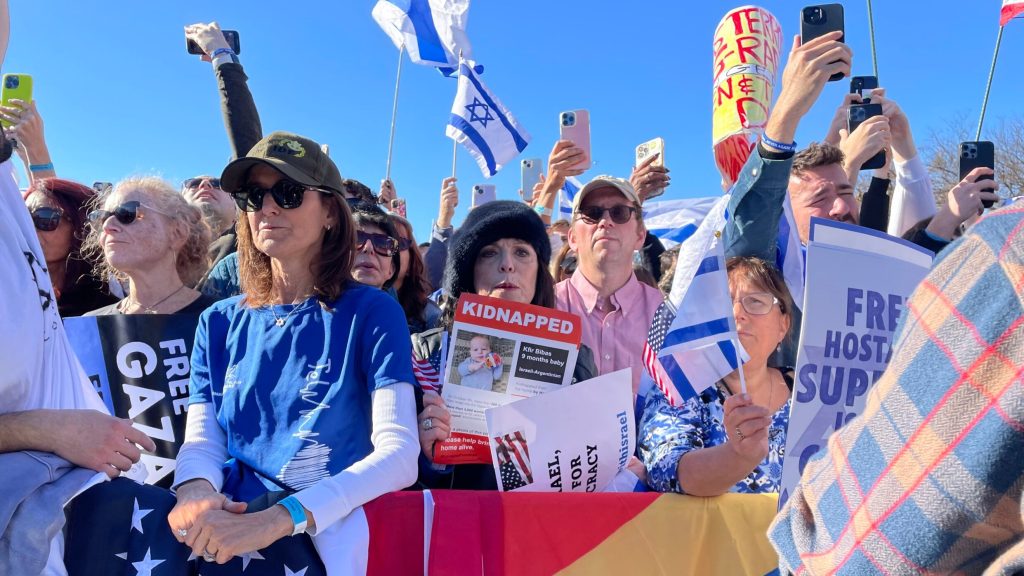
What Goes Into Survival: A Report from the Washington Rally
People came by the hundreds of thousands, schlepping by train, chartered bus, overnight flight. Students raised money from relatives. Federations funded last-minute airfare. It was a rally for people who don’t attend rallies.
Life in Learning
The special relationship between Jews and learning has been endlessly documented. Yet these investigations have largely overlooked the textual communion that transubstantiates books and learning into the body and blood of Jewish experience.
Letters, Fall 2020
The Coffee a Good Schmooze Demands, Unjustified Resentment, Whose True Voice?, and Yesterday's Today


Comments
You must log in to comment Log In