Kaplan Unbound
Sixteen years ago in these pages, Daniel Landes panned Arthur Green’s Radical Judaism (“Hidden Master,” Fall 2010), arguing that its effort to harmonize science and religion owed less to Green’s acknowledged sources in Hasidic thought—the Gerer Rebbe, Hillel Zeitlin, and Abraham Joshua Heschel—than to an uncredited and unmystical “hidden master”: Mordecai M. Kaplan, the founder of Reconstructionism. This was “cause for concern,” Landes argued, because Kaplan’s naturalistic theology was “boring,” possessing “no actual God with whom one can have a relationship.” Green took umbrage, and a heated back-and-forth spilled into the Letters section of the following issue (Winter 2011). Landes’s overall critique, Green said, “represent[ed] a theological bankruptcy lurking in traditional Jewish circles,” failing to account for the “two great battles” old-time religion had lost to “evolution” and “biblical criticism.” “My book,” he wrote, “is an attempt to create a viable Judaism in the face of those realities.” As for Kaplan, Green hedged: “In some areas,” he wrote, “the divergence between us may be more in affect than in substance. But in matters of the heart that makes all the difference.” But, he added, “Kaplan at least tells you openly and honestly what he means by ‘God.’”
Was Mordecai Kaplan “boring”—a long-winded hyperrationalist, lacking in spiritual passion—a point on which Landes and Green almost seemed to agree? Or was he the standard-bearer of a forthright religious modernism, speaking truth to the “theological bankruptcy” of retrenched Jewish pietists? Could he have been both at the same time?
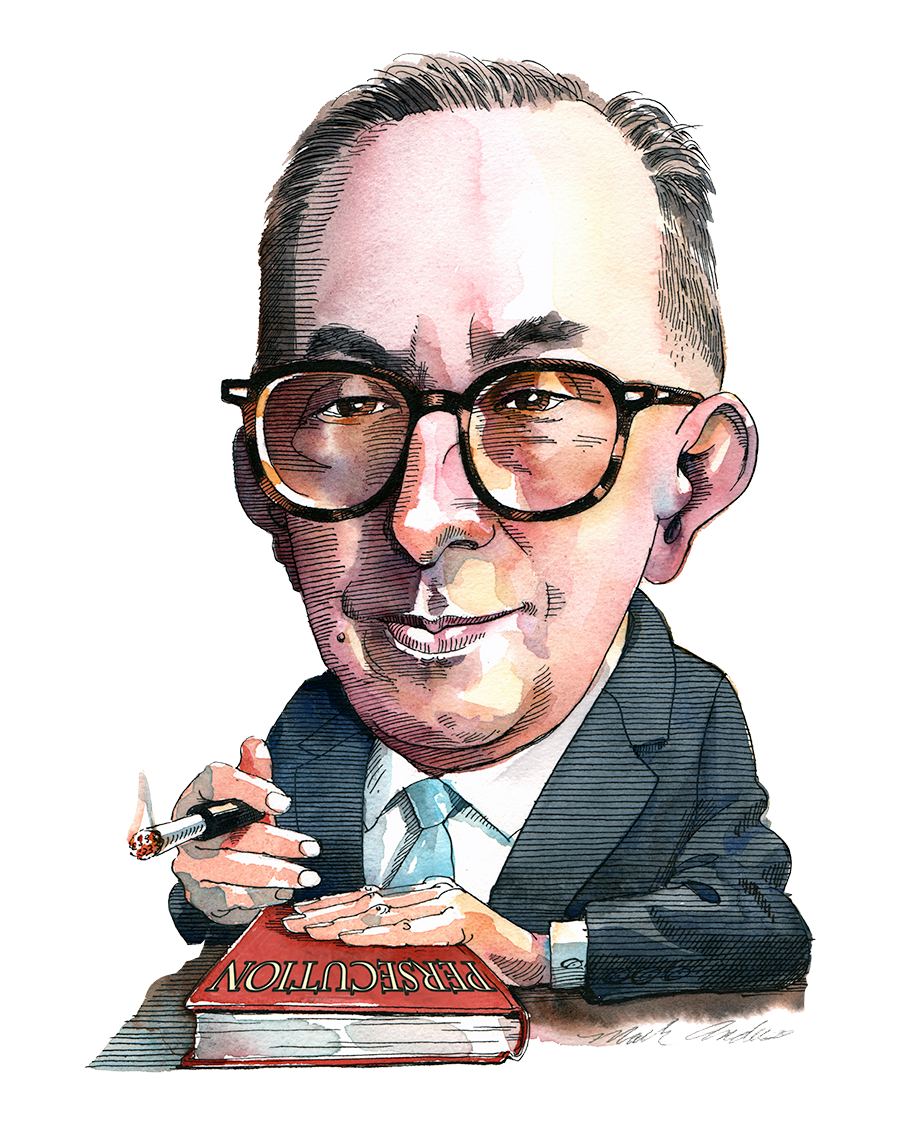
Jenna Weissman Joselit’s new biography of Kaplan leans more toward the Landes side of the ledger. Joselit seems less interested in hacking through the weeds of Kaplan’s philosophy than in painting the portrait of a powerful man brought down by his overweening flaws. His analysis of Judaism proved, she writes, “more effective as a diagnosis than a cure.” His prescription for its modernization was “evanescent rather than enduring,” lacking “warmth” and “championing the head at the expense of the heart.” It’s an honest, compelling, and well-composed character study. But it also undervalues the continuing reverberations of the Kaplanian revolution within contemporary Judaism.
Joselit’s is the second book-length biography of Kaplan, coming more than thirty years after Mel Scult’s Judaism Faces the Twentieth Century. The contrasting titles tell a tale. Scult, a Kaplanian, was not too starry-eyed to overlook some of the character flaws that Joselit lingers on—the anger, the hesitancy—but he emphasized Kaplan’s extraordinary productivity, ending his telling at the high point of his subject’s impact on Jewish thought, the 1934 publication of Judaism as a Civilization. This was only about midway through Kaplan’s long lifespan. For her part, Joselit is more interested in the “restless soul” beneath this output, tracing Kaplan through his later years, as his impact diminished and his ideas grew increasingly dated and quixotic, to the last pages of his storied journals, written in the faltering hand of a near-centenarian, which she characterizes with a melancholy novelistic gesture: “Little by little, what had been a crowded canvas of words dwindled to an empty slate inhabited by a lone paragraph or two, their tone querulous and pinched.”

Joselit has written appreciatively of Scult’s work, particularly his pioneering achievement in bringing Kaplan’s diaries—twenty-seven volumes spanning seven decades—to light. Joselit describes them as a “counter-narrative” to the public record:
The journals are full of surprises, the most striking of which is that the man who inhabits them is not only the Olympian figure who strode across the modern Jewish landscape, busily reconstituting, revitalizing, and reconstructing everything in sight, but a much more tentative, even hobbled, soul.
Although drawn from an essay published in these pages before she had completed the biography (“To Whom It May Concern: Mordecai Kaplan the Diarist,” Winter 2023), this passage displays some of the breezy style Joselit uses here to ventilate her ponderous subject, whose foibles she makes into something of an in-joke between her and the reader. But it also indicates the private dimension of Kaplan that intrigues her.
As a social historian, Joselit effectively structures her biography around the series of Kaplanian controversies, each chapter using at least one of them as its focal point, which allows her to situate his life’s progress in the evolving Jewish culture warsof the era. One of the more interesting revelations of this approach, especially given the vast chasm that now seems to yawn between Orthodox and non-Orthodox Judaisms, is the extent to which Kaplan emerged out of the early twentieth-century upwardly mobile flow of traditionalist Jews. Joselit describes the attraction of Kaplan, an Americanized Litvak rabbi, newly minted from a Jewish Theological Seminary that was not quite yet the flagship of the Conservative movement, to the nouveau richeOrthodox congregants of Kehilath Jeshurun in a wonderful passage that reads like a rabbinic job description if it were written by Jane Austen:
He had yichus, knew his way around a blatt gemara . . . was well-versed in secular subjects; well-mannered, even courtly; exceedingly well-spoken, his English clear and unaccented, and in his neatly pressed and customary uniform of coat, tie, and vest, he cut a very good figure.
Meanwhile, Joselit’s use of the diaries as counterpoint allows for an interior view of the burden this position increasingly laid on the young Kaplan, stewing in doubts about the faith of his fathers and the tepid religiosity of his congregants. She cites an exhalation from the journal (“Oh God, what anguish of soul! How doubt tortures me.”) before offering a summary of his state of mind:
Souring on traditional Judaism, he increasingly questioned its sustainability in and value to modern America. . . . As one set of long-held ideas began to crumble, a set of new ones began to take shape and coalesce into something more than isolated instances of grumbling and finger-pointing: a “theology of Reconstruction.”
Through this deft back-and-forth, Kaplan’s early philosophical development appears less as an abstraction than a dark night of the soul.
Each subsequent controversy, unfolding over the span of decades, functions as a bellwether for the extent to which Kaplan’s disquiet had distanced him from his origins. Initial skirmishes within orthodoxy—delivering drashes in English rather than Yiddish, for example, or running afoul of Jewish center investors over his increasingly heterodox opinions—give way to the founding of the Society for the Advancement of Judaism—“Concepts came easily to Kaplan; titles consistently eluded him”—where he tried to ban Kol Nidre and propagated the redacted siddurthat made him the most infamous Jewish thinker to be excommunicated since Spinoza.
Joselit narrates each of these episodes with just enough of a dip into their theoretical underpinnings to provide context. But she accentuates the extent to which Kaplan unbound was a harsh master, imperious and sometimes obtuse. His dissatisfaction with the reality of the Society for the Advancement of Judaism was on display from the first High Holidays, when his idealized congregants behaved like ordinary Jews. “Unnerved by the spectacle of several hundred disengaged Jews,” Joselit writes, “he lashed out at them.”
Diary entries over the years give full voice to his compounding disenchantment:
Dragged down by this “lot of Babbitts”; . . . frustrated by the necessity of coming up with something new to say every Shabbat morning only to discover that his wisdom fell on deaf ears, “as though I haven’t said a word”; . . . Kaplan was at his wits end. “Whew!” he wrote in his diary, which was fast becoming his very own book of lamentations. “This is more than I bargained for.”
As for Kol Nidre, the multiyear battle Kaplan eventually lost to his congregation over its inclusion—he excoriating the Aramaic incantation renouncing all the year’s vows as unethical and anachronistic and they insisting it wouldn’t be Yom Kippur without it—is core to Joselit’s theory of Kaplan’s ultimate shortcoming. “If anything put to the test Kaplan’s vision of a modern Judaism,” she writes, “in which the head ruled the heart and intentionality triumphed over sentimentality, Kol Nidre was it.”

This deficiency was thrown into particular relief by Kaplan’s rivalry with his dynamic junior colleague at the Jewish Theological Seminary, Abraham Joshua Heschel, as Joselit writes:
Heschel was everything Kaplan was not. Where Kaplan ran cold and prioritized reason, Heschel ran hot and emphasized emotion; where Kaplan was given to abstraction, Heschel waxed lyrical; where Kaplan spoke in terms of propositions, Heschel drew on the language of mitzvot.
After being told by his young students that his approach was too “‘analytic and lacking all emotion and piety,’” Kaplan lost his temper yet again. “‘I sputtered and I fumed and I swore,’ Kaplan recorded in his diary.” The choice words about his rival that he also consigned to his personal record constitute the closest Joselit’s book comes to a tell-all: “a ‘remarkable Jewish replica of Billy Graham . . . quite adept in coining aphorisms which catch the ear, but which are half truths.’ A ‘fool’ and a ‘fraud,’ whose writing was ‘just a hodge podge of words,’ his idea of religion a ‘specious kind of buberized Hasidism.’”
Joselit portrays the founding of a distinct Reconstructionist denomination, coming when Kaplan was already well into his eighties as an almost reluctant coda, resulting both from Kaplan’s failure to more profoundly impact preexisting institutions and from the insistence of his followers, foremost among them his son-in-law, Ira Eisenstein. “Eisenstein,” Joselit writes, “made the case that unless Reconstructionism, so heavily identified with Kaplan, drew a line between itself and Conservative Judaism, it might run the risk of ‘evaporating’ once he was no more.” Joselit doesn’t follow the movement’s later development, leaving it among the odd clutter of Kaplan’s final years, which included the text for a “Jewish Pledge of Allegiance” and the proposal that “Israel apply for admission to the Union as its newest state.” But doing so would have given her more ammunition: After sputtering along through the 1970s and ’80s, Reconstructionism was revitalized by an infusion of feeling or “affect”—Kaplan might have called it “buberized Hasidism”—under Arthur Green’s leadership.
In the final analysis, Joselit’s judgment of Kaplan is bifurcated. “A substantial number of American Jews read what Kaplan wrote and many, many more listened to what he had to say,” she writes, “but their interest went only so far.” “If I had possessed the power of song and poetry, or at least of wit,” Kaplan lamented to his journal, “I might have succeeded in winning men’s hearts for God and Israel. Men can’t be reached through their minds.” Joselit adds: “But that’s precisely where Kaplan set his sights.”
At the same time, she acknowledges, almost in passing, the extent to which Kaplan’s innovations have now become normative. “Detached from their denominational moorings,” she writes, “floating free, they eventually caught on.” “Contemporary American Jews,” she suggests, “are echoing Kaplan” through celebrating bat mitzvahs, publishing idiosyncratic haggadot, picking and choosing among Jewish rituals based on personal need, and searching for “a Jewish identity that is neither racial nor religious but something much more vague though no less powerful.” But “chances are they’re hardly aware of the connection.”
Though Kaplan himself had originally conceived of Reconstructionism as a vivifying current coursing throughout American Judaism rather than a separate movement within it, Joselit’s intent is not to celebrate his posthumous success, so much as to trace a tragic biographical arc—and in this she succeeds. Scult was a little more generous, applying to Kaplan a bon mot that had first been said about George Bernard Shaw: “It is the fate of those who live very long lives to be remembered in their latest phase.” It might be even more generous to read him through an insight attributed to another irascible modernist, Pablo Picasso: “When you make a thing, a thing that is new, it is so complicated making it that it is bound to be ugly. But those that make it after you, they don’t have to worry about making it. And they can make it pretty.”
Suggested Reading
To Whom It May Concern: Mordecai Kaplan the Diarist
The father of Reconstructionist Judaism left behind a towering legacy, and seventy-seven years of personal Journals—a tightly scrawled window into his mind.
Jerusalem Holiday
Did Hadassah Kaplan invent the gap year in Israel?
Early Modern Blasphemy and Postmodern Virtue
Was Jacob Frank a progressive trendsetter or a seductive cult leader?
Chaim Grade: A Testimony
Toward the end of his life, the talmudist Saul Lieberman published his only Yiddish essay, an appreciation for his friend, the novelist Chaim Grade, the great witness to a lost world. Translated and with an introduction by Allan Nadler.
Comments
You must log in to comment Log In