Remains of the Desk
What will survive us, said Philip Larkin, is love. One certainly hopes so, but a less cheerful possibility might occur to anyone cleaning an attic, renting storage, or planning an estate sale. What survives us, it turns out, is stuff: keepsakes, tchotchkes, old tax returns—a thousand disposable things, never disposed of. As humans, we’re doomed to accumulate. Particularly if we’re writers.
Writers, it turns out, are prolific accumulators. They keep everything: letters, notebooks, prize citations. They keep contracts, however small, and drafts, however messy, and journals, however shameful. And then, when engulfed, they start organizing, packing up, taming the chaos.
Consider the literary archive, a repository of letters, notebooks, and curios. At Ben Hecht’s archive, you can fondle his gold Oscar statue, which he used as a doorstop (behold its scuff marks). In Philip Roth’s archive, a mountain of drafts could fill a horizon. (For a similar vista, see Roth’s library, all seven thousand volumes, which repose, in un-Roth-like silence, at the Newark Public Library.)
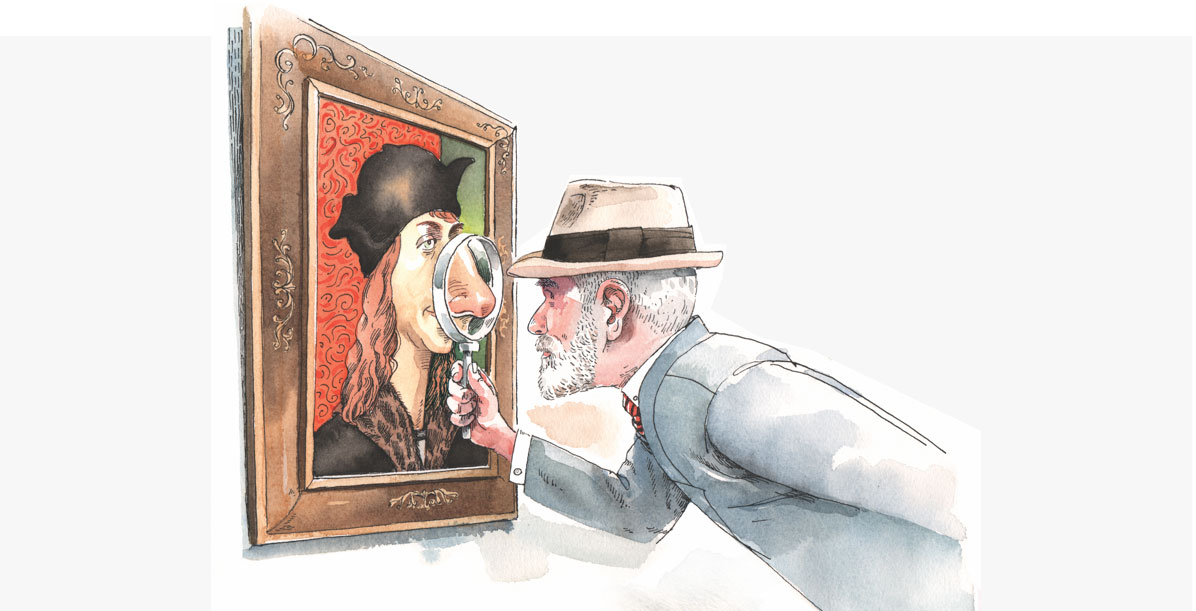
Libraries welcome everyone. Archives draw obsessives, the helplessly curious. Having burrowed through a writer’s published work, they crave something more: closeness, insight. How was Herzog written? What peculiar alchemy produces art? One finds clues scattered in plain sight and unexplored corners.
You enter silently, through heavy glass doors. Around you, people read silently. Trolleys trundle by bearing boxes. A civilized silence prevails.
Already, a treasure: a letter from Bernard Malamud to Alfred Kazin. The critic had complained that “in Malamud’s stories everything real becomes unreal.” Malamud objects, but ten years later, he comes around. “It’s the old business: how to make the real unreal,” he tells a friend, stealing (unconsciously?) Kazin’s very phrase.
Another collection. Leonard Michaels is relieved when the New Yorker accepts his story “Cryptology.” At times, his hero Nachman speaks Yiddishized English: “Mind you, I say good. I don’t say genius.” But a fussy copyeditor starts meddling. The Yiddish vanishes. The language is deracinated, Americanized. Nachman could be James Johnson.
Michaels, a miniaturist, wrote clean, sharp prose, but writers are a varied species. “A novel, like a letter, should be loose, cover much ground, run swiftly,” Saul Bellow says. Sometimes, a single sentence captures a writer’s whole gestalt. “The basic theme of my work is the moral commitment of man,” Malamud wrote Kazin.
These examples are from letters—a researcher’s main quarry. Letters are not just “fossils of feeling,” as Janet Malcolm says, they’re living records, crammed with facts. The best of them reveal intentions, hidden muses. Equally fascinating are drafts, those emblems of failure and persistence. Drafts of stories often tell a story themselves: of false starts, second thoughts, early hopes dashed. First thought, best thought? Hardly. Often, it’s the ninth thought. Or the fiftieth.
A lesson follows. What we call, a bit romantically, the writer‘s life, is mostly frustration. Careers stall. Doors open, then close. “We love this first section of Philip Roth’s novel,” a New Yorker editor tells his agent in 1961, “but don’t see it as sufficiently self-contained to make a piece for us.” Roth, always sensitive, sulked, but other writers were more stoic. “No hard feelings . . . that’s the way the type sets,” Grace Paley shrugged, forgiving Commentary for rejecting every single one of her stories in the 1950s.
Archives vary considerably. Some are small, calm places, as quiet as a therapist’s waiting room. Some archives gleam with newness; others are bunker-like. The Library of Congress, where I write this, is a simple, careworn space, suggesting a large middle school classroom. Here, at numbered desks, beige folders are splayed open. The impression is of carefully tended order.
A mood persists, hard to name; call it subdued excitement. Research, like gambling, is for optimists: The odds are long, but hope persists, and sheer pleasure impels you forward. In the archives, we read like children, with utter absorption. In a way, it returns us to our earliest enchantment with reading.
Once again, you drift toward letters. The author Frederick Busch called letters “a way of clearing the throat, of warming up the vocal cords.” That’s certainly true. Writers think in print. More surprising are the ingenious ways letters are exploited. Samuel Beckett copied entire paragraphs into his novels. Philip Roth, blessed with brilliant correspondents, wasn’t above a little plagiarism when superb letters arrived.
In a 1987 letter, Saul Bellow confessed that he was “too busy becoming a novelist” to assimilate the Holocaust. Remarkable. But how accurate? “Despite what Bellow wrote to Cynthia Ozick,” Gerald Sorin claims, “the reality is that Bellow strained to answer that question several times in his long and prolific career, beginning with Dangling Man.” Never trust the artist. Trust the biographer.
In many collections, including Bellow’s, a hint of disorder lingers. Inside these boxes, people go mad, get divorced, find love, make art, and travel. Archives can feel like a necropolis whose citizens are more alive than the living.
Among these citizens, envy runs rampant. Rivalries abound. But so do conspiracies of kindness. “Philip Roth has enlisted me in his continuing (and noble) effort to bring Aharon Appelfeld, one of the three most eminent Israeli novelists, into the Academy.” That’s Cynthia Ozick writing to John Updike. “Appelfeld,” she went on, “is a pure soul and a pure writer (even for those of us condemned to read him in translation).”
Larkin (a librarian, you’ll recall) distinguished between the “magical value” and “meaningful value” of archives. The magical value is the thrill, the spine tingle: “This is the paper he wrote on, these are the words as he wrote them.” As for the meaningful value, it lies in scholarship that “enlarge[s] our knowledge and understanding of a writer’s life and work.”
Here, precisely, is where archives can aid literary appreciation. As Leon Edel said, “When a writer sits down to write, all his past sits behind his pen.” Exhuming that past, we notice patterns, themes, artistic impulses. In Larkin’s case, the revelations weren’t pretty. What remained was the poetry, in all its pathos, compassion, and humor.
Of everything that once existed, little remains, a depressing fact, yet in this, we find archives’ larger meaning. The oldest battle—the battle against loss—is here fought object by object. Archives play a role in the quest for knowledge, but also that second, larger saga, the battle between memory and forgetting.
And now, as the afternoon winds down, you collect your things. Before leaving, you’ll approach the front desk, flashing your open laptop to show there’s nothing hidden inside. Here you’re both a welcome guest and a potential smuggler.
You’ll return, you always do, but to what exactly? Archives are fluid, expanding, transforming, yet all the while, conferring a certain tranquility. “The past, no matter how turbulent, is restful,” Ozick once told Updike.
Constant, too, are the pleasures of research. The allure of secret knowledge. The pleasure of scholarly sleuthing. The comfort and strangeness of the past. As Stacy Schiff once said, “You enter into an archive at your own risk: it tends to swallow you whole for months or years at a time.”
Suggested Reading

Some Kind of Genius
Ben Hecht’s life should come with a warning label: Biographer, beware. A trickster, a prankster, a cool Wildean ironist, he was always a fast-moving target.
Man of Letters
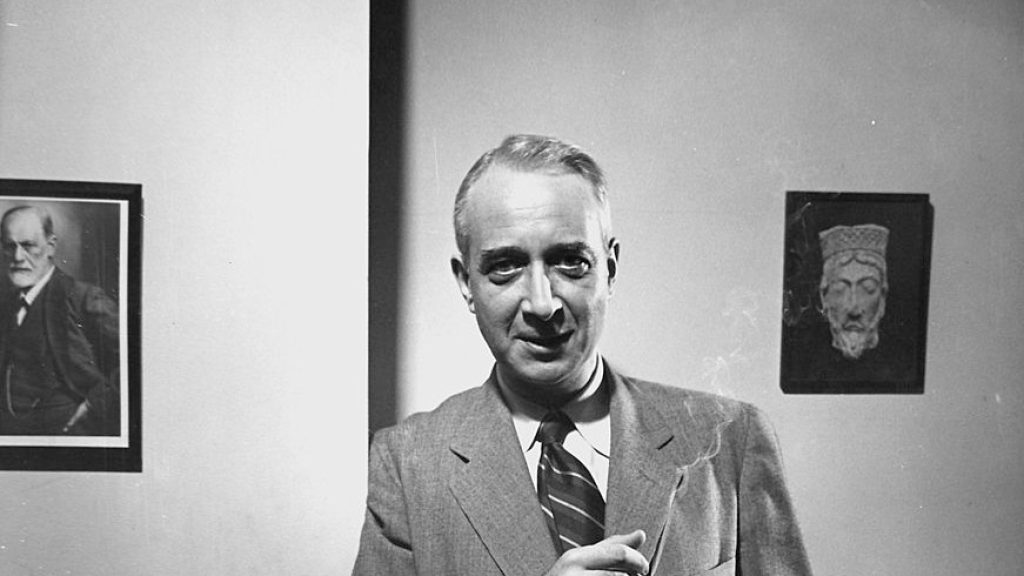
Adam Kirsch’s judicious selection of Lionel Trilling’s letters throws instructive light on both Trilling’s life and American intellectual culture from the 1920s to the 1970s.

Golden Ledgers
In the world's first Jewish public library, bearded scholars read side-by-side with bare-armed women.
The Natural at 70
Bernard Malamud’s 1952 fable has always seemed the most American of Jewish novels and the most Jewish story in American folklore.
Comments
You must log in to comment Log In