Roald and the Giant Bummer
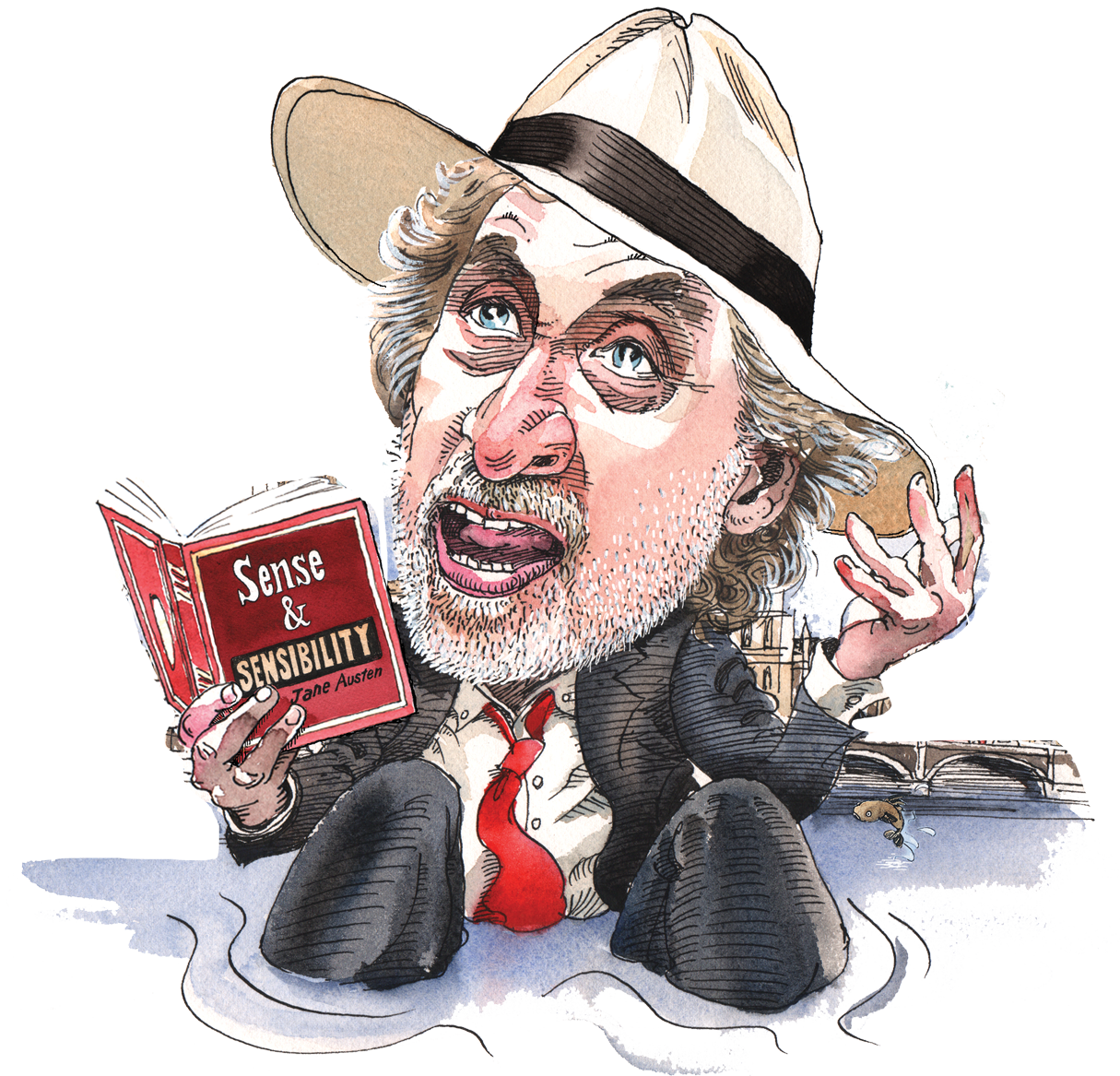
Night after night, audiences are filling up the Music Box Theater on Manhattan’s West 45th Street to see Giant. A hit of the 2024 London season, it’s now playing in these parts with John Lithgow once again in the lead as Roald Dahl, the celebrated children’s book author with an explosive imagination, a nasty streak, and a wicked tongue. Mixing fact with fiction (the playwright, Mark Rosenblatt, makes sure to write in the Playbill that “many details and characters in Giant are drawn from Roald Dahl’s own life, others are invented”), the play explores what took place—or didn’t—when Dahl was called on by people with a financial stake in his success. Tom Maschler (real and portrayed by Elliot Levey), Jessie Stone (made up and played by Aya Cash), and Felicity “Liccy” Crosland, Dahl’s longtime mistress who’s recently become his fiancée (brought to life by Rachel Stirling), urge Dahl to apologize for antisemitic remarks he’s recently made and defended about Israel’s 1982 invasion of Lebanon. This trio, two of whom are Jewish, hope to prevent Dahl’s reputation from taking a tumble and the sales of his books going belly up.
Early in act one, while toying with making public amends, the author is also called on to set the record straight about his brand new children’s book, The Witches, which appears to be riddled with antisemitic stereotypes, and to publicly disavow that interpretation of it.
Jessie: Jews have been stereotyped as demons. And devils. Who stalk the land. And print money. And kill children. For pleasure and gain.
Dahl: They have?
Jessie: Yes. For centuries.
Dahl: Fucking hell. Now I’ve written an allegory.

Over a leisurely lunch in the course of which Dahl further makes clear his distaste for what he’s being asked to do—“I don’t want to be conciliatory,” he says with a sulk, followed shortly thereafter by the acknowledgment that he didn’t stumble when making these horrid remarks but was “wildly self-aware”—the four participants in this drawing room drama have at one another, the zingers fast, furious and biting. It’s all great fun until it isn’t and the central tension of the play—will he or won’t he apologize?—loses its fizz.
At that point, it’s not clear what audience members hope to gain from their evening in the theater. An expose? A reconciliation? An exorcism, or what one of the play’s characters calls an “unentrenching?” Do we want to experience Dahl’s fall from grace? His comeuppance? Perhaps we’re rooting for him and his freedom to say unpleasant and at times unspeakable things?
It’s enough, I suppose, to relish the rapid-fire exchange of words across the stage, the rare sight of intelligent people engaged in conversation about history and language and accountability. True, Noel Coward, this isn’t. All the same, talking openly about prejudice, especially the unvarnished kind that lands on Jewish people and doesn’t budge, counts for something. To hear someone called a “house Jew,” as Dahl gleefully describes his seemingly close friend to his face scorches the ear. To watch as John Lithgow unfurls his giant body from one chair only to nestle into another before picking up the phone to mischievously spew all manner of antisemitic verbiage shocks as the play hurtles to its unsavory climax. Throughout, Dahl’s having a good time at everyone’s expense. He’s scored one over on his compatriots and even has bamboozled his fiancée, who believes he’s going to apologize. We know better.
No wonder, then, that when it’s time to salute the actors, the customary wild applause that attends most Broadway plays of late is nowhere to be seen or heard. The appreciative audience with whom I saw the show gave the gifted performers a standing ovation but it seemed motivated as much by its eagerness to see them smile as it was out of admiration. The clapping felt more dutiful than full-throttled.
Two and a half hours after we first excitedly entered the Music Box in the hope of experiencing something palliative and cleansing, we left subdued, tainted by so much toxicity. Were we any the wiser? The smarter? Did we learn anything new about the inner workings of antisemitism? The levers of prejudice? I’m afraid not. The play ends with no resolution in sight, no clear victory at hand. There was nothing to cheer about. What lingered in the air, tarnishing our spirits and following us all the way home, was the muck of ill-will.
Suggested Reading

From the Great War to the Cold War
The facts of Hans Kohn’s life are so extraordinary that it almost seems as if the first half of one remarkable figure’s biography had been spliced together with another’s in the second part.

(Almost) People
What does it mean to say that books have lives?

In the Melting Pot
More than a century after Zangwill's play debuted, the melting pot is still bubbling. What does that really mean for American Jewry?

Everybody Loves Dreyfus
It is hard to make an antisemite a sympathetic character, but a recent film by Roman Polanski does just that.


Comments
You must log in to comment Log In