Odysseus: Prince of Tides
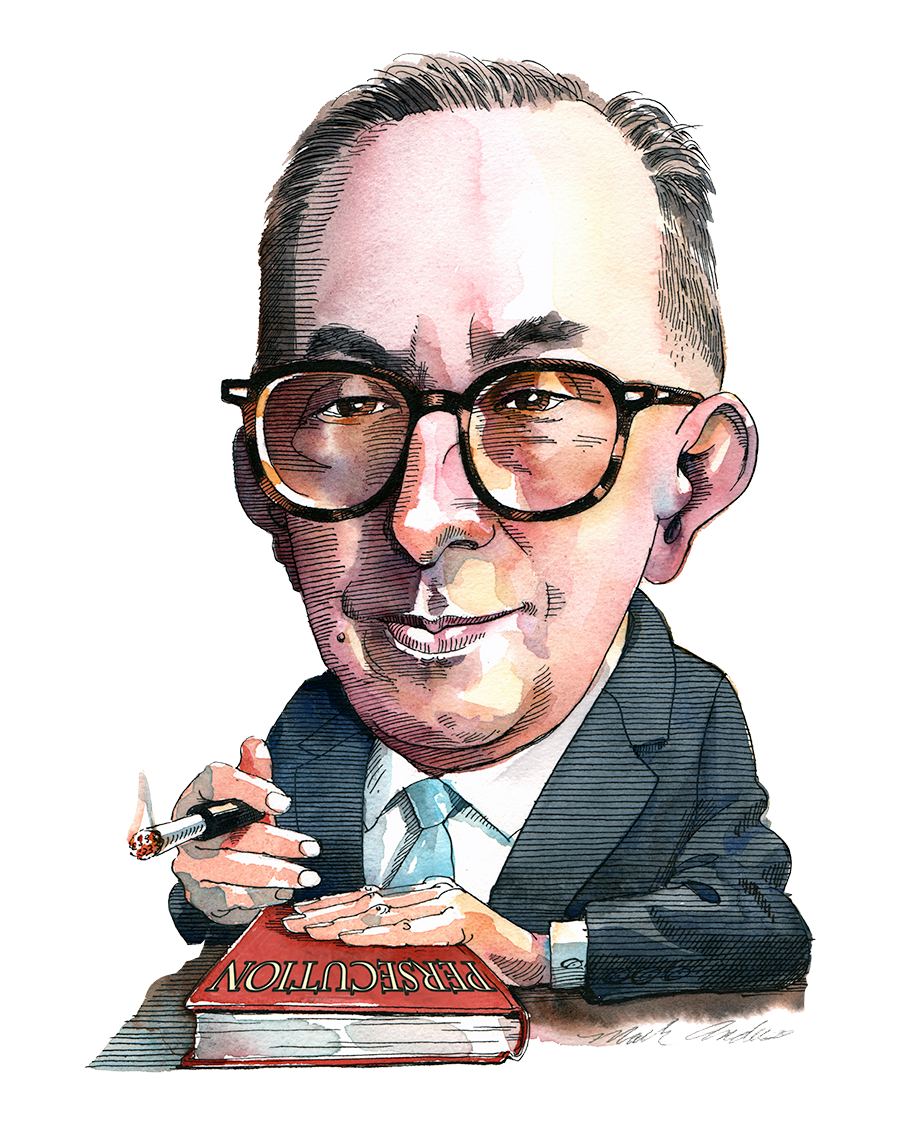
While European Jewry burned, Erich Auerbach, the exiled German-Jewish philologist and pioneer of comparative literature, wrote his masterpiece a stone’s toss, as the Cyclops throws, from the ruins of Troy. The highly assimilated product of a classical Prussian bildung, he’d nonetheless found himself subject to the Nuremberg Laws. Unable to remain at his post in Marburg, he accepted the position of faculty chair for Western languages and literatures at Istanbul University. Whether he arrived by Orient Express or ventured across the wine-dark sea is a detail lost to history.
Mimesis: The Representation of Reality in Western Literature is best remembered today for its first chapter, renowned to the point of overuse, “Odysseus’s Scar.” It initiated Auerbach’s sweeping claim, argued through the multilingual close reading of an encyclopedic array of texts, that the Western canon evolved from heroic mythology toward humanistic realism. As his polemical opening salvo, Auerbach compared Homer’s tale of Odysseus’s aging nurse recognizing him by the scar on his leg with the Akedah, the story of the binding of Isaac.
It was timely and subversive to begin with the Bible, given the Nazi intent not just to destroy Jewish bodies but to expunge the Hebraic contribution to Western civilization.All the more so because Auerbach preferred the Tanakh to Homer. He contrasted its “lacunae,” or narrative ambiguities, favorably with the one-dimensional absolutism of Homer’s mythic storytelling. Abraham’s laconic dialogue with Isaac on the road to the altar—his ambiguous “here I am” (hinneni)—gestured toward the unnamable depths of human experience. The omniscient and long-winded exposition of the backstory behind the scar on Odysseus’s thigh left little to the imagination. Regardless of its facticity, Auerbach said, the Bible resembled “history,” achieving a realistic texture “fraught with background” and therefore closer to common life than the legends of Homer. He wrote:
Abraham, Jacob, or even Moses produce a more concrete, direct, and historical impression than the figures of the Homeric world . . . because the confused, contradictory, multiplicity of events, the psychological and factual cross-purposes, which true history reveals . . . still remain clearly perceptible.
This analysis came with a word of caution to would-be realists. “To write history is so difficult,” Auerbach added, “that most historians are forced to make concession to the technique of legend.”
This may seem like heady stuff to unleash on a summer blockbuster. But, whether or not the director meant it to be taken that seriously, The New York Times columnist Ezra Klein has already declared Christopher Nolan’s The Odyssey “the political movie of the decade,” and Auerbach provides the gauge to measure his overestimation. Despite intermittently succeeding as spectacle and suggesting a handful of novel readings, the film is overwrought, overlong, and dull, an underwhelming attempt to draw social and psychological authenticity from the ancient tale—in Auerbach’s terms, to render the Greek epic biblical. Nolan, straining under the difficulty of creating a kind of historical fiction from Homer’s legend, conveying its hero’s longings and inner torments, makes too many concessions to cliche.

Nolan is a big-budget auteur, known for his cerebral, convoluted storylines. His breakthrough, Memento (2000) ingeniously unfolded its neo-noir plot backward. Even Oppenheimer (2023), which won Academy Awards for best picture and director, avoided the arc of a standard biopic with a nonlinear arrangement of its material—and plenty of lacunae—though, like The Odyssey, it ultimately succumbed to narrative fatigue, devolving into a hackneyed courtroom drama. Nolan also made three Batman movies and, particularly in The Dark Knight (2008), achieved a kind of gritty cape-and-mask naturalism, whose only fault is that it spawned too many imitators, draining the superhero genre of a lot of its fun.
The Odyssey, though generally hewing to the three-part structure of the source material, carries Nolan’s stylistic imprint. The young Telemachus (Tom Holland) bears up against the sneers and arrows of his mother Penelope’s (Anne Hathaway) suitors, who, at the outset, are seen being entertained by a staff-pounding bard (the rapper Travis Scott), who recounts Odysseus’s ruse of the Trojan horse in a series of disjointed words, interspersed with quick-cut imagery.
As the visual editing continues deliberately to undercut the establishment of a predictable rhythm, we discover Odysseus (Matt Damon) in the clutches of Calypso (Charlize Theron), not so much Homer’s imprisoned boy toy as a lotus-dulled amnesiac, slowly divulging the litany of his sorrows to her therapeutic ear. Both the Trojan horse flashbacks and the ongoing sessions with Calypso then persist as pivot points to infuse a sense of slow-burning psychodramatic revelation into the unfolding story (much as Nolan used the recurring memory of a fictional conversation with Einstein in Oppenheimer).
At last, two-and-a-half hours in, we are reminded that Nolan is also an action director, as father and son, along with the loyal swineherd Eumaeus (John Leguizamo), vanquish the interlopers, particularly their ring leader, the draft-dodging Antinous (Robert Pattinson). Then, in a final plot twist, Odysseus and Penelope sail off into the Ionian sunset on a private yacht.
Apart from the action sequences and the resemblance of his armored Agamemnon (Benny Safdie) to the Caped Crusader, the Batman side of Nolan comes through in his attempt to achieve a superheroic realism that situates the fantastic in a believable world. This intention is announced in the film’s opening title card: “A time of apparent magic.” That “apparent” is a hedge on the supernatural, inviting the audience to experience the divine and monstrous elements of the tale as plausible extensions of a human world, whether as psychodrama or hallucination. Of the wide pantheon of gods, only Athena (Zendaya) remains visible but as a vague projection of the hero’s psyche, hovering somewhere in the Jiminy Cricket zone between conscience and imaginary friend.
In general, these choices work visually, aided by Nolan’s admirable decision to forsake CGI. That the oxen of Helios, the sun god, who himself is never seen, are ordinary cattle and the rage of Poseidon is made manifest only in especially aggressive waves lends the material a heartbeat of uncanny nemesis.
Even more blatantly supernatural elements of the story benefit from the same optical understatement. Though the Cyclops episode suffers for being denuded of Odysseus’s quick-witted “I-am-Nobody” gambit, the beast itself, a sixty-foot animatronic puppet, has pathos. Circe (Samantha Morton) is no longer alluring, but she bewitches as a drab, middle-aged, manual vivisectionist. Hades, shot under the midnight sun on the black sands of an Icelandic beach, is stunning.

The words, rather than the images, are what get Nolan into trouble, hauling him up short against Auerbach’s biblical standard of mimesis as subtly shaded truth telling. Pitching the dialogue in a demotic key (Telemachus calling his father “dad” has emerged as the most ridiculed example, though apparently it’s somewhat defensible) is a conscious attempt to take the classic off its pedestal and imbue it, as Nolan has said, with “language that has emotional not intellectual meaning to people.” But the screenplay quickly clots with stilted and didactic phrases (“Our bronze age is collapsing!”), and the effort to bend the epic toward a credible contemporary sensibility rings shallow.
Transposing Calypso from vampy sea nymph to ketamine therapist, tending the PTSD of wounded-warrior Odysseus, is not in itself a bad idea, especially in our time of endless warfare. But the poorly written scenes are so reminiscent of The Prince of Tides, you expected Damon’s Odysseus to start whispering, “Lowenstein, Lowenstein,” and their wisdom is Chicken Soup for the Achaean Soul: “You’re a man who needs to control his fate. But you cannot control this. You must give yourself to the storm, give yourself to Poseidon.” Actually, Nolan’s film suffers in comparison to Barbara Streisand’s 1991 psychological romance. She and Nick Nolte had chemistry as therapist and client, while Nolan has managed to saddle Damon and Theron, neither of them unappealing, with scenes so morose it’s hard to imagine they’re lovers.
Nolan’s moral falls flat as well. In this telling, the Trojan horse becomes an original sin against “Zeus’s Law” of hospitality, a concept Nolan elevates into a ponderous watchword. Odysseus has perverted generosity itself into a means of storming the castle and, burdened with Oppenheimer’s hangover, lives to regret inventing a weapon that turned the tides of war. Here, too, the notion might work if it felt more intrinsically rooted in the story or if Odysseus’s dawning self-knowledge felt more complex or “fraught with background.”
But this lesson is tacked on in a tedious monologue, which comes across as a last-ditch effort to provide both ethical and narrative coherence to a long, disjointed movie. Worse, it robs Odysseus of his identity, famously described in the first line of Homer’s poem with the Greek word polytropos. Translators have found in the term valences both of the hero’s multifarious cunning and his tortuous wanderings, from E. V. Rieu’s “resourceful” and Richard Lattimore’s “man of many ways” to Emily Wilson’s recent “complicated.” In Nolan’s hands it comes to mean little more than Matt Damon playing “a guy with issues.”
Yet this is what Ezra Klein seems to have liked about the movie, preferring an Odysseus chastened by “Judeo-Christian ethics” to the unprincipled “trickster,” an archetype he associates with the amoral power politics of Trump and Musk. It’s a pundit’s read, skimming a message off the surface of a murky piece of art without sounding its depths. In conflating the trickster with the conman, it also absolves Nolan of conjuring up such a vapid and humorless Odysseus. If Nolan had allowed this complicated hero even a modicum more of his tricksterism, he might have been more compelling.
In critiquing the totalitarian quality of Homeric “legend” and asserting Hebraic narrative as a font of Western humanism, Auerbach was waging a culture war against the Third Reich. Concluding his journey through the canon with multivalent modernist novels, including James Joyce’s famously intricate and playful adaptation of The Odyssey, he argued that they offered an antidote to the violent uniformity of fascism. A humane trickster, after all, needn’t be a political conman. He might just as well contend against the powers that be as represent them, whether he took the form of a Dublin Jew, a storm-tossed and resilient sailor on the wine-dark sea, or a myriad-minded man in the alcove of a Trojan library, spiriting himself into a gift—a book of many ways—to leave at the gates of the enemy.
Suggested Reading
The Lowells and the Jews
Robert Lowell, the most famous poet in America, icon of the antiwar movement, consummate Boston Brahmin, was especially glad to speak with a Jewish group because, he drawled, “I’m an eighth, you know.”

A Little Arabic within Our Hebrew
Tracing lines of a linguistic heritage through Hebrew poetry.
More Important Things
Francesca Segal's prize-winning The Innocents: A generous, garrulous, and utterly genuine group portrait of Anglo-Jewry.

Revisiting Hill 24
The first movie I ever saw, not counting Dumbo, was Hill 24 Doesn’t Answer, a landmark black-and-white film about Israel’s War of Independence . . .
Comments
You must log in to comment Log In