Giving and Taking
For about four years in the middle and late 1970s, I was a Jewish fundraiser, and, later, for some twenty years, I raised money for Dissent Magazine. I was never very good at it, but I did get to be good at talking about it.
I started early, standing at eight or nine years old on the Grand Concourse in the Bronx with my tzedaka box. But it was a few years later in Johnstown, Pennsylvania, that I learned what Jewish fundraising was really like. After my bar mitzvah in 1948, my parents took me, as an “adult,” to the annual United Jewish Appeal (UJA) banquet. You didn’t go there to eat; you went to give. And 1948 was a year when the importance of giving was recognized throughout the Jewish world—no Jew in town really had a choice about whether or not to attend. A speaker from New York talked with great emotion about the founding of Israel, the war that was then going on, and the desperate needs of the refugees waiting in Europe. Pledge cards were passed out, filled out at the table, and then put in an envelope and passed to the head of the table. There sat the owner of the big local furniture store—let’s call him Irv Shapiro. Irv knew everybody’s business: who was doing well and who wasn’t, who was paying college tuition for their children, who had a sick mother, who had to bail out a bankrupt brother, who had money to spare. He opened each envelope, looked at the pledge, and, if he thought it wasn’t enough, tore the card in half and passed it back down the table.
That’s how the Jews of Johnstown raised money, without a Jewish state, without—or supposedly without—coercive power. Was that charity, or was it the functional equivalent of taxation? Was it giving or taking? The Hebrew word tzedaka signals something of both.
What moral principle was Irv Shapiro enforcing? He probably couldn’t have answered that question, but it seems obvious: from each according to his ability, to each according to his need. That line is, of course, from Marx’s Critique of the Gotha Program. Irv was no Marxist, but he adjusted the demands he made on each of us according to his knowledge of our ability to pay. And we all believed that the UJA would distribute the money to those most in need. From each to each describes equally well charitable giving (what we were supposedly doing) and justified taking (what Irv Shapiro was actually doing). This is the principle that Marx believed would apply after the withering away of the state—that is, in a condition of statelessness. Centuries of Jewish statelessness forced us to anticipate Marxist doctrine.
The prophet Isaiah denounced those who “grind the faces of the poor.” I thought of UJA fundraising as grinding the faces of the rich—and of everyone else, of course, including my parents who had little money (their pledge card was not returned). But it was the rich who most needed grinding, and while that might not be a nice thing to do, it certainly seems the right thing to do.
Years later, I read Maimonides’s famous discussion of the eight levels of tzedaka, two of which stick with me. The highest form of charitable giving, he wrote, is to set up a poor man in business or in work of some sort, to make him independent. This is the height of tzedaka because it recognizes and respects the dignity of the person who is being helped—which is also, obviously, a requirement of justice. When charity perpetuates dependency and subordination, it is unjust. Maimonides also insists that tzedaka should be anonymous, ideally for both the giver and the receiver. The encounter of helplessness, on one side, and condescending benevolence, on the other, is bad for both sides.
This traditional sense of what tzedaka should be was shaped by the belief that charity had to be governed by the demands of justice. I first learned this in Johnstown in 1948.

UJA fundraising in the academic world had no Irv Shapiro until the 1970s when Frank Fisher, an economics professor at MIT, decided that his colleagues weren’t giving anywhere near enough money. He proposed a way to change that: He got a few other professors, one at each rank, to announce what they were giving and what they thought each assistant, associate, and full professor should be giving. They set quotas much higher than UJA fundraisers had ever hoped for—and it worked: MIT raised far more money than ever before.
And then Frank asked me to do the same thing at Harvard, which I did, with a lot of help from my friends. One of them was the libertarian philosopher Robert Nozick, with whom I had taught a course called Capitalism and Socialism, a semester-long argument. Bob fiercely opposed any form of state coercion, but he could live with Irv Shapiro’s version of stateless coercion.
The leaders of the national UJA recognized that Frank had started something that should be encouraged, so they created a faculty cabinet and asked him to head it. When he finished his term, I agreed to take over. I was actually much better at telling people how to raise money—the Fisher method—than doing it myself.
As head of the faculty cabinet, I was invited to UJA board meetings. I was at one when Anwar Sadat’s visit to Jerusalem was announced, and I remember our excitement. I have even more vivid memories of visits to Israel with UJA staff and potential donors. As we traveled around the country in a bus, the donors were called to the back for a conversation. It was Irv Shapiro in full force: “We think a hundred thousand would be a good number for you—you’ve had a good year and your kids are finished with college.” Probably no one on the bus would have agreed, but I thought this sounded like Jewish socialism.
I never tried the Irv Shapiro method with Dissent. It didn’t take that much money to publish the magazine, and we survived for a couple of decades with one or two rich—by our modest standards—donors and a fund drive every couple of years. By the time Mitchell Cohen and I took over as editors, it was an annual drive, and there were a few more donors with whom we had regular conversations. I never said anything like “I know how much you made last year.” But we did sometimes talk about an obligatory leftist tithe, or a kind of tax.
There are old-time socialists who believe that the only right way to grind the faces of the rich is through actual taxation. Gift giving gives wealthy givers too much influence; it’s an exercise of power. Magazines like Dissent should get a state subsidy—available, perhaps, to other magazines with different politics. But that sounds too much like the authoritarian socialism of Eastern Europe: The bureaucrats who picked the magazines would also have too much power.
I recognize that the influence of wealth needs to be constrained, but I’m inclined to value the beneficence of those wealthy men and women who voluntarily do what they are obligated to do (and don’t evade their taxes).
Suggested Reading

It Was Like This: Excerpts from an Academic Memoir
Scenes from Anita Shapira’s gripping memoir.
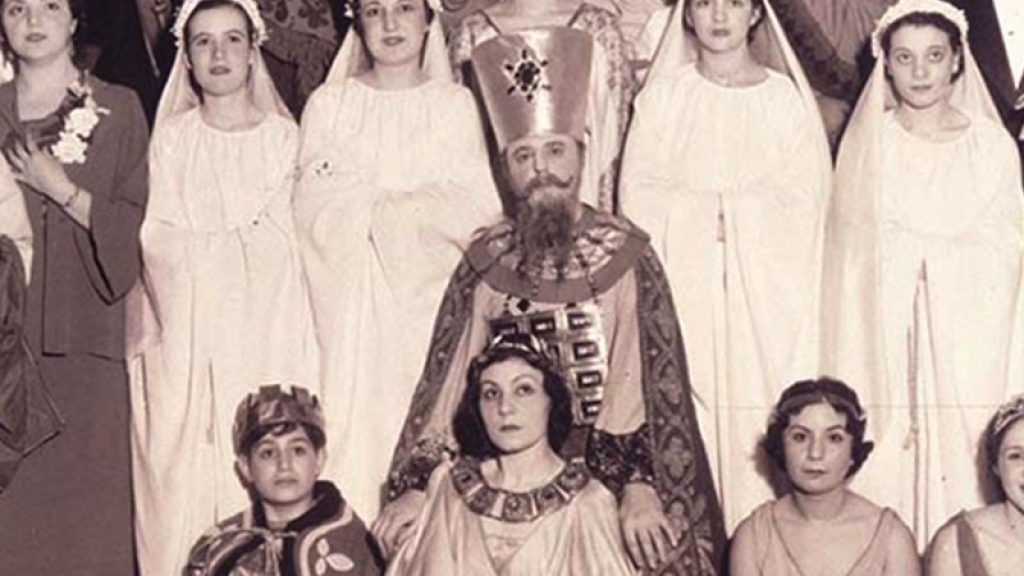
All-American Esther
Stuart Halpern’s anthology Esther in America tells the story of the surprising uses to which the story of Purim has been put in American history.

Was Lincoln Jewish?
Abraham Lincoln became a saint for American Jews. But was he also "bone from our bone and flesh from our flesh"? One rabbi thought so.

Harold Bloom: Anti-Inkling?
It’s a bit surprising to come across Harold Bloom’s confession that the literary work that has been his greatest obsession is not, say, Hamlet or Henry IV, but a relatively little-known 1920 fantasy novel.


Comments
You must log in to comment Log In