Yavne and its Sage: Menahem Kahana (1946–2025)
A decade ago, I visited my teacher, Menahem Kahana, in his home office. He had recently completed a five-volume edition of the midrash Sifre on the book of Numbers, which he had been working on for thirty years. Although he had retired from the Hebrew University of Jerusalem, I knew he was still working, so I asked him what he was up to next. With a smile, he told me, “ani metaken et ha-olam”—“I am repairing the world.”
At first, I wasn’t sure what he meant—Kahana rarely left his study. As it turned out, he was busy with a commentary on the fourth chapter of tractate Gittin in the Babylonian Talmud, which deals extensively with rabbinic notions of tikkun olam. But for Kahana, consulting medieval manuscripts to recover the sense and sensibilities of classical rabbinic literature really was a way to repair the world.
Kahana, who died on December 10, 2025, was a leading scholar of classical rabbinic literature. He spent his entire career in the Hebrew University Talmud department as a student, faculty member, and department chair. He is best known for his pioneering work on the halakhic midrashim, the early works of rabbinic midrash.
He belonged to the third generation of professors in “the Department” (as the Hebrew University Talmud department is affectionately known by insiders) and to the first generation of its professors born in the Land of Israel. His parents were European immigrants—his mother was of German descent, and his father came from a long line of Hasidic rabbis—and they raised him on Kibbutz Yavne, a religious kibbutz filled with halutzim who had survived the Holocaust. Like the Yavne of the late first century, where Yohanan ben Zakkai and other rabbis found refuge after Jerusalem’s destruction in 70 CE, the modern Yavneans saw themselves as the vanguard of a new, authentic form of Judaism. This time, rabbinic knowledge and religiosity would be paired with physical strength—the hands that held the Talmud would also steer a tractor and, when necessary, shoot a gun.
As a young man on the kibbutz, Kahana lived out this ideal, alternating between working in the fields and studying Talmud with his uncle. After completing his army service, he studied at the religious Zionist yeshivas of Otzar ha-Talmud and Merkaz ha-Rav, and in 1970 he enrolled in the Hebrew University Talmud department, commuting to Jerusalem from the kibbutz, where he continued to live, teach, and farm.

In Jerusalem, Kahana was drawn to Professor Eliezer Shimshon Rosenthal (1915–1980), a towering talmudist of the department’s second generation who had fled Germany as a teen and became a founding member of Kahana’s kibbutz. It was Rosenthal who had most clearly articulated the Jerusalem school’s methodology, riffing on famous sayings of Pirkei Avot and the great European philologist Friedrich August Wolf: “The philological-historical commentary stands on three things: On the textual version; on language; and on the context, both literary and historical.”
Kahana wrote his dissertation under Rosenthal, and in the eulogy he eventually delivered for him, it became clear that he saw his teacher not only as an exemplary academic scholar but also as “a giant in Torah and Wisdom”:
His straight path in the War of Torah—in his incisive reasoning on the one hand, and in his conduct on the other—became a symbol already in his lifetime. And his immense contribution to the renewal of Torah and its study among our redeemed nation will yet be described and recounted for generations to come.
Rosenthal’s academic approach did not contradict traditional Jewish learning so much as allow scholars to advance beyond it. As Kahana reminisced, his teacher liked to compare the denizens of the “old beit midrash” to riders on a carousel bobbing up and down on wooden horses: “As one turns, they feel that they progress up to the heavens, but as they descend, they return to the exact same place from whence they left.” Only the new tools of European philology could successfully lift the scholars and their Torah heavenward.
Kahana submitted the dissertation he began under Rosenthal, “Prolegomena to a New Edition of the Sifre on Numbers,” in 1982. The ponderous and somewhat pedantic title was lampooned in Joseph Cedar’s 2011 film, Footnote, when the media personality Jackie Levy interviews a Hebrew University philologist named Professor Eliezer Shkolnik: “Prof. Shklonik is currently working on a critical edition of a tractate from the Palestinian Talmud.” Shklonik: “No, an introduction to a critical edition!” And yet, Kahana’s work was indispensable.
Heeding Rosenthal’s first rule to correctly establish the “textual version,” Kahana maintained that a good edition of Sifre Numbers should be largely based on an eleventh-century manuscript housed in the Vatican Library. Kahana argued for its importance in at times counterintuitive ways. For example, although earlier scholars considered the Vatican manuscript to be faulty because it regularly quotes biblical verses that differ from the standard Masoretic text, Kahana persuasively argued that the better manuscripts were actually those that had not been corrected to conform to the canonical text.
With the Vatican manuscript in hand and other manuscripts close by, Kahana found and illuminated all kinds of textual problems. Sometimes, he found evidence that medieval scribes had cut and pasted from other sources, leading later scribes and printers to try to correct what they perceived to be a mistake, creating yet further problems. By turning to the manuscript evidence, Kahana could trace and undo these errors. More interestingly, he also was able to shed light on the very processes through which the midrash was created.
One of Kahana’s most significant contributions was a small book of roughly one hundred pages, in which he cataloged all of the known manuscripts of the halakhic midrashim—a herculean feat before the advent of online resources. To produce this catalog, Kahana visited libraries throughout the world (he was one of the first non-Russian rabbinic scholars to visit Russian libraries) and looked at hundreds of thousands of torn pages from the Cairo Geniza. Kahana’s search for any shred of halakhic midrash led him to learn Arabic and to read through the works of the medieval Karaites who cited the midrashim in their critiques of rabbinic Judaism. In doing so, Kahana discovered the Sifre Zuta Devarim,a work of halakhic midrash that had long been lost.
Although his work often focused on textual and terminological questions, the third stage in Rosenthal’s method—the focus “on the context, both literary and historical”—was never distant from Kahana’s mind. In his studies on the Babylonian Talmud, for instance, he uncovered what he called “sugyot megamatiyot”—sections with specific goals that can only be appreciated by noting how the talmudic editors steered the direction of the passage. He also demonstrated the importance of numbers in the internal organization of many works of rabbinic literature. For instance, the Sifre originally had sixty comments on the Priestly Blessing, which is made up of sixty letters. Similarly, the opening section of Genesis Rabbah, which discusses the six days of creation, is organized around patterns of six—discussing six things that preexisted the world and starting off with six different rabbinic sermons on the opening verse of the Torah.

I first met Kahana almost twenty years ago, when he was spending a sabbatical living in Teaneck, New Jersey, and working at the library of the Jewish Theological Seminary of America. Other Israeli academics had spent time in our community, but Kahana, with his commanding presence and sharp wit, stood out. When he skipped a Shabbat afternoon lecture given by a leading rabbi, Kahana explained his absence with a shrug and a question: “If everyone came to the shiur, who would learn Torah?”
A few years later, when I became a student at the Hebrew University, I finally got to see Kahana hold court in the Talmud department’s seminar room on Mount Scopus. The room was small, and if it filled up on the first day of a course, he would scare away students. Even those of us who stayed remained vigilant; Kahana had no problem cold-calling students who were ill prepared. But his remarkable dedication to the craft of teaching won us over. Kahana would often quote another famous saying from Pirkei Avot: “According to the labor, thus is the reward.”
When he joined the faculty of the Department, Kahana, to his dismay, had to leave Kibbutz Yavne and move closer to the university. He moved to the settlement of Alon Shvut, and the building of the Har Etzion yeshiva, the flagship institution of centrist religious Zionism, towered over his new neighborhood. But Kahana rarely stepped in the building, and for many years, the yeshiva’s rabbis looked down on those of its alumni who went on to study with him at Hebrew University. The feeling was mutual; on the first day of his class in the Babylonian Talmud, Kahana would tell students like me that we needed to shed our yeshiva past if we were to ever become true scholars.
In time, however, I came to realize that for Kahana, academic study was a form of religious learning. As he told me once, he hoped that his books would one day sit on the shelf alongside other classics of rabbinic commentary. His attention to detail, and the careful collection and collation of manuscript evidence, was not just the tireless work ethic of a kibbutznik, redirected from the furrows of the field to the lines of a critical edition. For Kahana, philology was a form of piety.
In an article published in 1990, Kahana argued that the State of Israel itself required a wider adoption of academic study, methods, and sensibilities: “The religion of Israel has not yet been resuscitated, and its stature has not yet been raised.” This vision became even more urgent for him in his final months, when Israel was at war, and he felt that the religious Zionist community was distancing itself further from the socialist and democratic ideals he had learned in Kibbutz Yavne.

In a lecture he delivered at a gathering of the Religious Kibbutz Movement in 2024, Kahana argued for the dissolution of the chief rabbinate—an institution he described as intellectually dishonest and corrupt, along with much of the Orthodox leadership and, to some extent, contemporary Judaism itself. In Kahana’s view, the model of the religious kibbutz could save religious Judaism and the State of Israel, for it restored “the balance of the value of Torah study—through a courageous integration of elements of wisdom and scholarship—with the value of labor.”
Menahem Kahana viewed the ancient rabbis whom he studied as exemplars of a humane and rigorous religiosity. Philological scholarship had enabled him to uncover and understand the ideals of the original Yavne, which he believed were still relevant. For tikkun olam, Kahana taught, one needs to first go back to the manuscripts.
Suggested Reading
The Argumentative Jew
The most common understanding of disagreement, in the private sphere and the public one, is that it represents a failure.
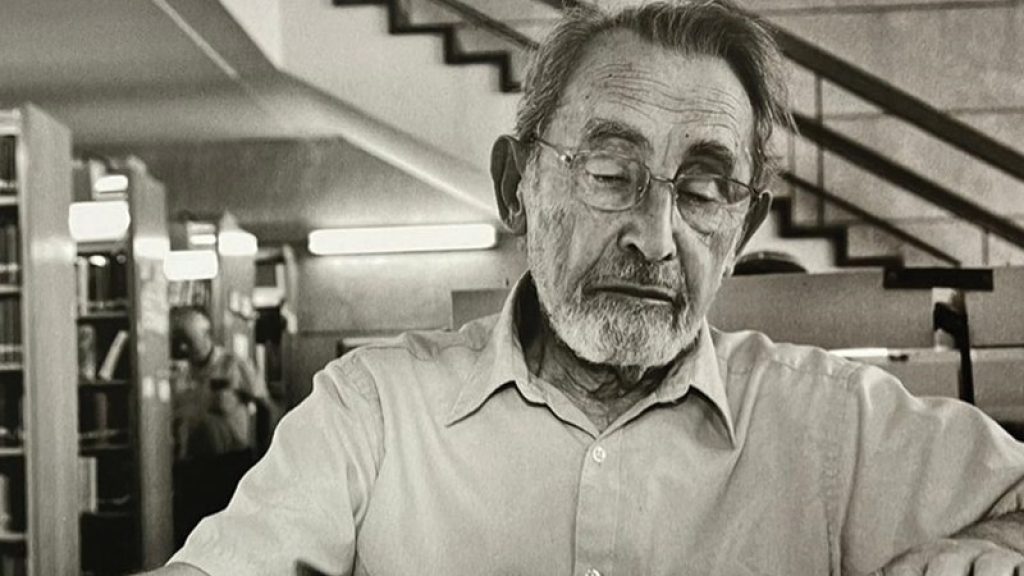
Like a Surgeon with a Scalpel, an Archaeologist with a Spade
David Weiss Halivni once rescued a scrap from a page of the Shulchan Arukh from the sandwich paper of a Nazi guard. His whole life turned out to be about rescuing texts.
Politics and Prophecy
Ari Shavit, the Israeli prophet-journalist, offers both rebuke of the past and warnings for the future, but unlike prophets of old, he has no solutions for the way forward.

Like Dreamers
How did a large number of religious Zionists come to believe a historical fantasy about the Vilna Gaon’s secret 18th-century Zionist plan?

Comments
You must log in to comment Log In